Ljubljana with Kids: A Family City Break That Actually Works
Ljubljana is small, car-free in the centre and packed with dragons, a funicular and a river full of boats, which makes it one of the easiest capital cities in Europe to manage with children.
Short answer
Ljubljana works brilliantly with kids. The historic centre is pedestrianised, the castle funicular is a four-minute ride to views, the river is lined with 50-minute boat trips from 15 EUR, and Postojna Cave, with its underground train, is a 6-hour tour from 132 USD. A castle ticket with funicular costs 19 EUR for adults.
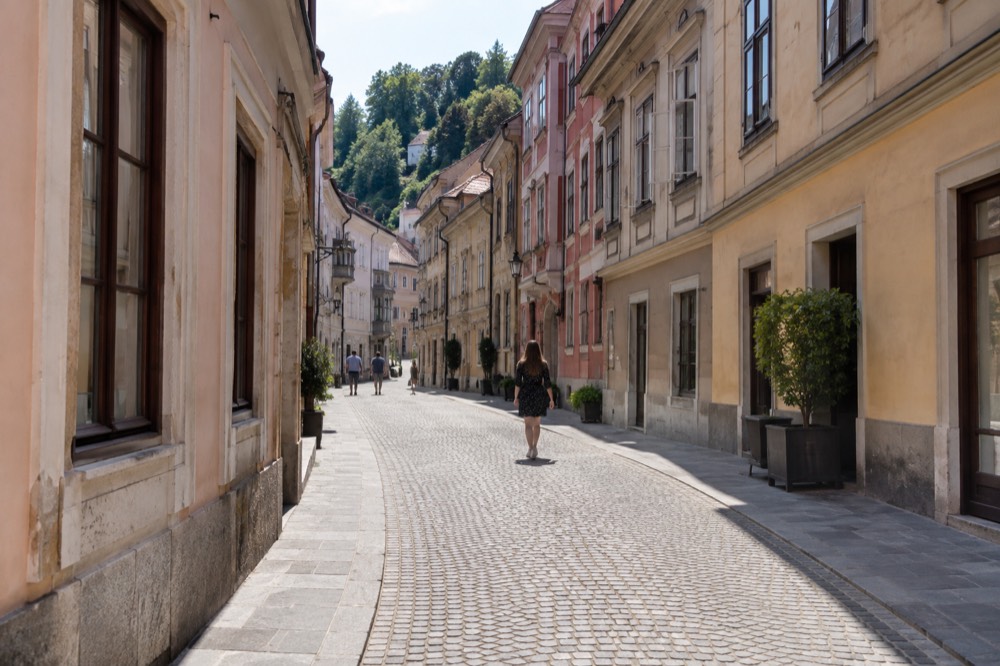
Ljubljana is one of the smallest capital cities in the European Union, home to around 293,000 people, and its historic centre is closed to cars. That single fact changes everything when you are travelling with children. No traffic to dodge at every kerb, no crossing a six-lane road to reach the ice cream, and the whole sightseeing core sits within a fifteen-minute walk of itself. The city also sits on a river with boat trips, under a castle reached by funicular, and an hour down the motorway from a cave with an underground railway. Very few European capitals compress this much child-friendly material into this little space.
This guide lays out how Ljubljana works for families: what the centre is like, a full one-day itinerary, the best day trips with children, a proper rainy-day plan built on the city's climate data, and the real costs of everything. Slovenia is in the EU, the eurozone and the Schengen area, so there is no money to change and no border to cross arriving from Italy, Austria or Croatia.
Is Ljubljana Actually Good with Kids?
Yes, and for structural reasons rather than luck. The centre is a pedestrian zone of roughly 20 hectares, the entire sightseeing core is walkable in fifteen minutes end to end, the castle funicular turns a steep uphill slog into a short ride, and the river offers 50-minute boat trips that keep small legs sitting down. Add a cave with an underground train an hour away and you have a city where the hard parts of travelling with children are largely engineered out.
The pedestrianisation matters more than any single attraction. Ljubljana progressively closed its historic core to general motor traffic, expanding the zone since 2007, which means a five-year-old can walk beside you rather than being clutched at the wrist the whole time. The old town is compact: Prešeren Square, the Triple Bridge, the Ljubljanica embankments and the funicular base are all within a few hundred metres of each other.
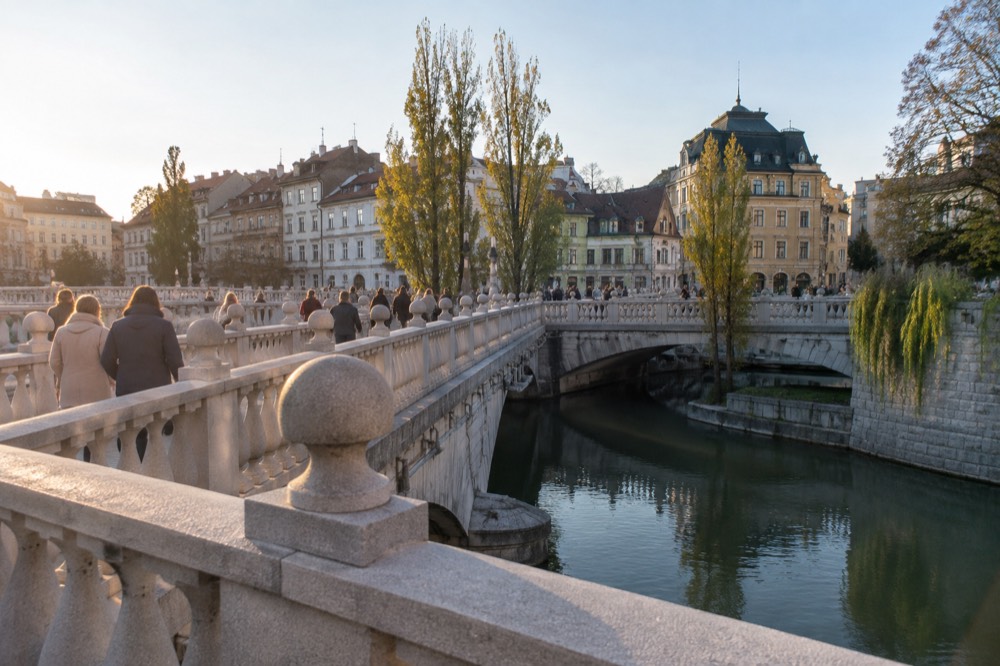
The dragon theme does a lot of quiet work. The dragon bridge at the east end of the centre gives children a landmark to hunt for, and dragons recur across the city, on the castle, in souvenir shops, on manhole covers. It turns a walking tour into a scavenger hunt without any effort on your part. This is the editorial desk's honest read after surveying what the city publishes and what tours cover: Ljubljana is a low-effort family city, and the effort it does demand is mostly about timing, which the later sections handle.
What Makes the Practical Side Easy, and What Does It Cost?
Budget roughly 40 to 60 EUR per day per adult for activities, less for children, because the expensive items are few. A castle ticket with funicular is 19 EUR for adults and 13.50 EUR for children aged 7 to 18, a river cruise is 15 EUR, a city bus ride is 1.50 EUR with free transfers for 90 minutes, and the free GuruWalk walks cost nothing up front. Museums run 6.50 to 10 EUR, and national institutions are free on the first Sunday of every month.
The transport system is simple and cash-free. City buses do not accept cash at all: you ride with an Urbana card, which costs 2.00 EUR to buy, or tap a contactless bank card or phone directly on board. A single zone 1 ride is 1.50 EUR and includes transfers for 90 minutes, which covers most family needs. The LPP Passenger Centre on Slovenska cesta, Urbanomat machines, kiosks and tourist information centres all sell and top up the card, as documented on the official payment methods page.
| Item | Adult | Child | Notes |
|---|---|---|---|
| Castle ticket incl. funicular return | 19.00 EUR | 13.50 EUR (7-18) | Covers Viewing Tower and exhibitions |
| Funicular, single | 3.30 EUR | 2.30 EUR (7-18) | Castle grounds themselves are free |
| River cruise (Barka) | 15.00 EUR | reduced | 50 minutes, May to Sep hourly |
| City bus, zone 1 | 1.50 EUR | 1.50 EUR | 90 minutes incl. transfers, no cash |
| Urbana card purchase | 2.00 EUR | 2.00 EUR | One card can serve the whole family |
| Ljubljana Card, 24 hours | 41.00 EUR | 26.00 EUR (6-14) | Covers funicular, cruise, buses, museums |
The Ljubljana Card deserves a quick family calculation. The 24-hour tier at 41 EUR includes the castle funicular, the river cruise, city buses, a guided walking tour, four hours of BicikeLJ bike share and one entry each to more than 30 museums and galleries. A castle ticket with funicular plus a river cruise is already roughly 34 EUR before a single museum, so the card pays for itself with one museum visit on top, which is exactly the kind of arithmetic the official card page supports.
For orientation on day one, the free walking walks are hard to beat. The Old Town walk on GuruWalk, "Ljubljana Unveiled", runs about two hours, is free with tips at the end, and covers the route from Roman roots to the dragon bridge; it is rated 4.91 from 1,496 reviews. A two-hour walk is the right length for children old enough to enjoy stories, and the tip model means you can bail early without losing money.
What Does One Perfect Day in Ljubljana with Kids Look Like?
Start at the funicular by the river, ride up to Ljubljana Castle for the morning, come down and walk the embankments to Prešeren Square and the Triple Bridge, take a 50-minute river cruise after lunch, then finish with dragons, ice cream and the outdoor market before dinner. It fits everything important into about 1.5 km of walking, and every stage has a rest point.
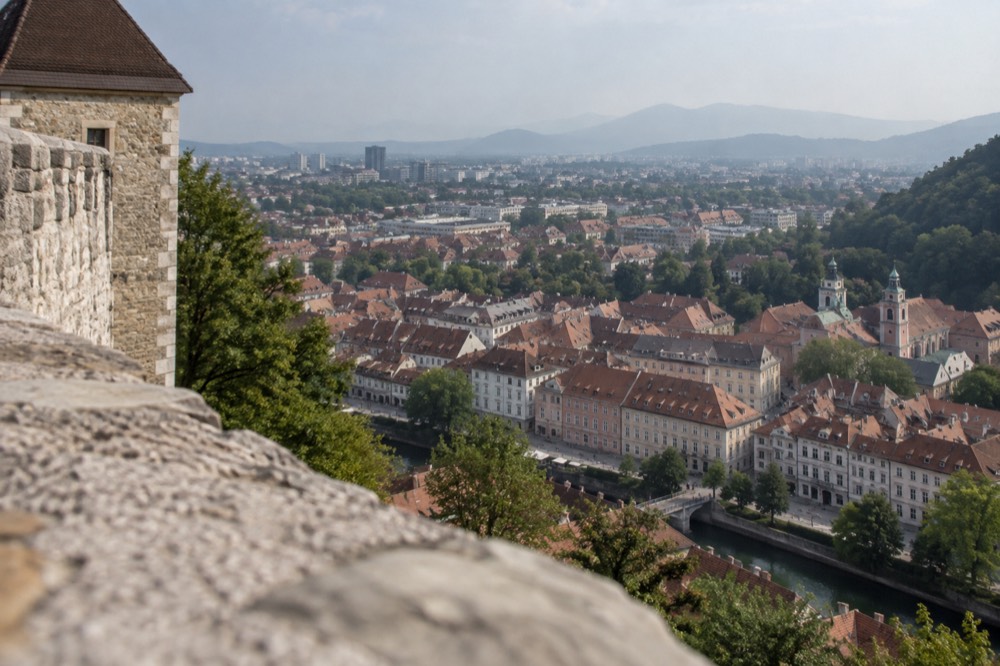
The funicular is the anchor. It climbs from Krek Square near the river to the castle in about a minute, running 09:00-19:00 from January to April and October to December, and 09:00-22:00 from May to September, every day of the year. The castle grounds are free to wander, so you can ride up, let children run the courtyard, and only pay for the tower and exhibitions if the mood holds. The Viewing Tower is the payoff: the whole red-roofed city in one sweep, with the Julian Alps visible on a clear day.
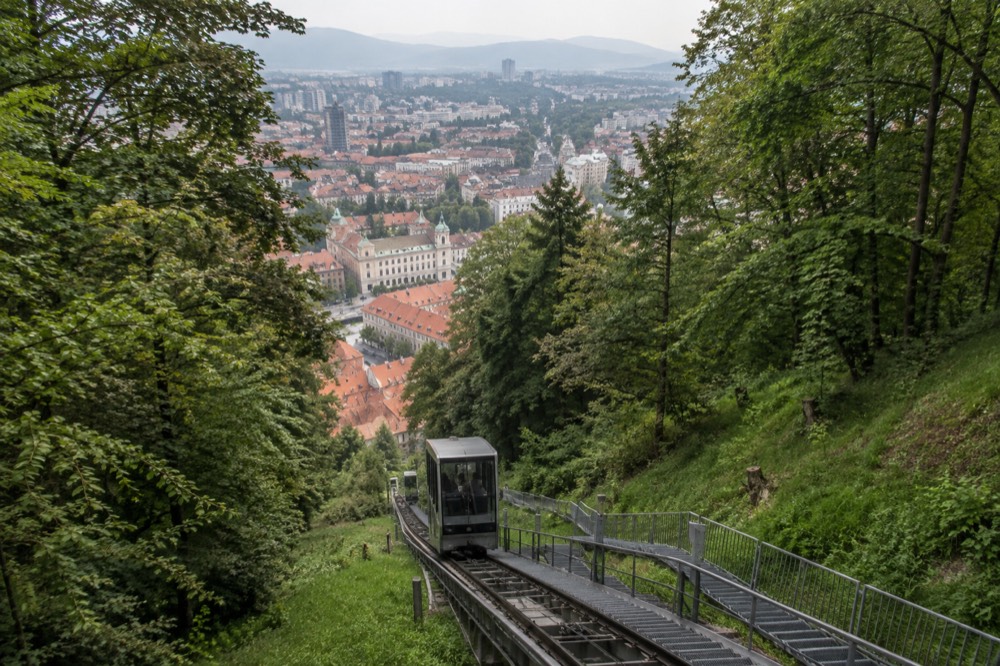
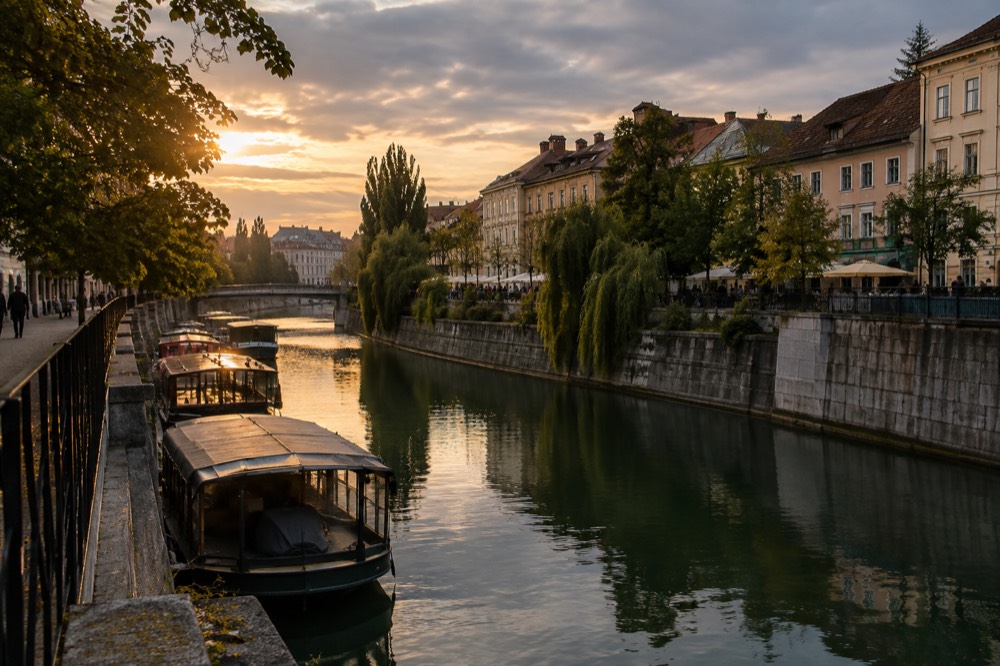
Come down, cross at the Triple Bridge, and let the river do the work. The embankments from the Barka pier at Breg up to Prešeren Square are the city's promenade, lined with cafés where a rest stop is painless. The river cruise departs hourly from 11:00 in season, last departure around 19:00, and takes 50 minutes; children stay seated, parents get the sightseeing done.
| Time | Stage | Why it works with kids |
|---|---|---|
| 09:30 | Funicular up to the castle | Ride instead of a steep climb |
| 10:00-12:00 | Castle grounds, Viewing Tower | Free grounds, pay only for what you enter |
| 12:00-13:00 | Lunch on the embankment | Dozens of options within 200 m |
| 14:00 | River cruise, 50 minutes | Sightseeing while sitting down |
| 15:30 | Prešeren Square, ice cream | Pedestrianised, no traffic |
| 16:30 | Dragon Bridge and river bank | Landmark hunt, short walk |
| 17:30 | Early dinner in the old town | Everything is a five-minute walk apart |
If you would rather have the castle logistics handled for you, the skip-the-line entry ticket with optional funicular ride starts from 17 USD and is rated 4.3 from 993 reviews, and a two-hour guided old town walk ending with the funicular ride up starts from 24 USD, rated 4.6 from 650 reviews. Both remove queueing, which is the one part of the castle visit that wears children down.
For families who want the castle story told rather than just shown, the Time Machine guided tour uses costumed guides, runs about an hour and includes the funicular, from 27.25 USD. And if the day is going well and small legs are holding up, Tivoli Park is a ten-minute walk west of the centre: lawns, a playground atmosphere and room to run, with no ticket anywhere.
Which Day Trip from Ljubljana Is Best with Children?
Postojna Cave, hands down, because the visit includes an underground train ride, which turns a 3.7 km cave system into an adventure rather than a walk. The cave is 10 C year round, the tour lasts about 90 minutes, and a combined cave and Predjama Castle tour from Ljubljana runs 6 hours from 132 USD, rated 4.8 from 2,802 reviews. The cliff castle gives children a knights-and-caves story in one day.
The train is the thing. Visitors board the cave railway and ride deep into the system before walking the gallery section, so a chunk of the distance happens while sitting down. The cave holds roughly 10 C all year, per the official ticket page, which makes it as good in an August heatwave as in a November downpour. Bring a layer even in summer; the temperature does not care what the weather is doing above ground. Direct tickets cost 34.90 EUR for adults and 20.70 EUR for children aged 6 to 15, with tours departing on a month-by-month grid, so check the timetable before you go.
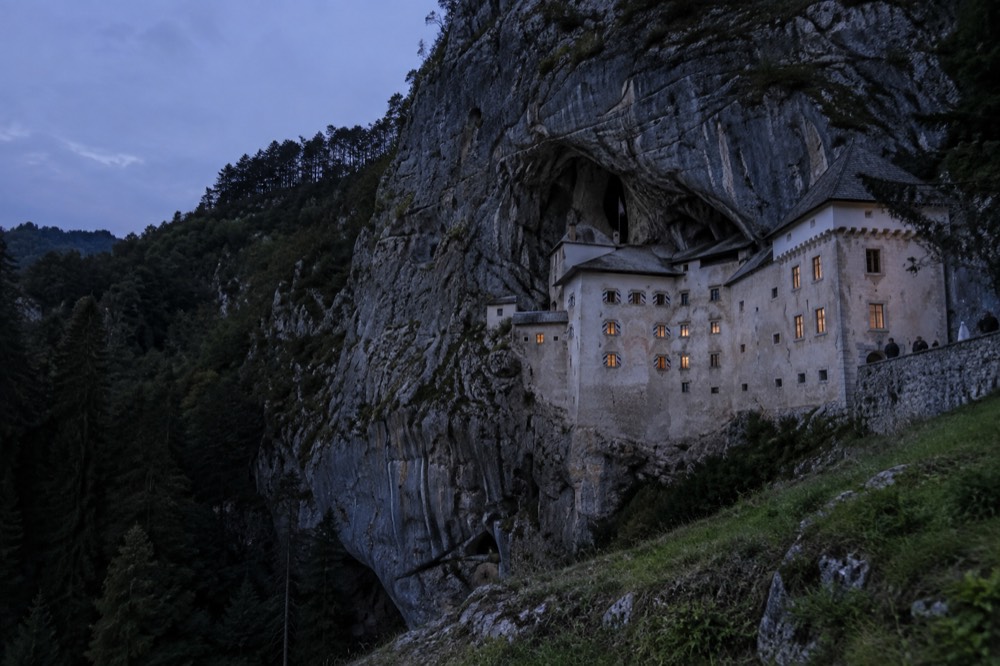
Predjama Castle, 24 EUR for adults, is built into the mouth of a cave system in a cliff face, and the story of the knight who held out in it against a siege is exactly the kind of history children retell at dinner. The combined tour from Ljubljana handles transport and tickets in one booking, 6 hours door to door, which matters when a return to the city by a set time is the difference between a calm evening and a meltdown.
The alternative, if caves are not your family's thing, is the coast: the Piran trip with a historic walking tour runs 6 hours from 86 USD, and the UNESCO Škocjan Caves and Piran combination runs 9h 30m from 126 USD. But for most children, the cave train wins.
| Day trip | Duration | From (adult) | Rating | Best for |
|---|---|---|---|---|
| Postojna Cave & Predjama Castle | 6 hours | $132 | 4.8 (2,802 reviews) | Under-12s, train lovers |
| Postojna Cave & Predjama, shorter tour | 5h 30m | $80 | 4.9 (474 reviews) | Tight schedules |
| Lake Bled and Bled Castle | 6 hours | $86 | 4.7 (1,641 reviews) | Lakeside walking, castle views |
| Škocjan Caves half-day | 4h 30m | $110 | 4.8 (48 reviews) | Older children, serious walking |
| Velika Planina guided hike | 6 hours | $86 | 4.8 (74 reviews) | Mountain families, age 8+ |
A note on Škocjan versus Postojna: Škocjan is a walk, roughly 400 stairs and 2 to 3 hours, while Postojna is partly a train ride. That is the real decision. Škocjan is the more spectacular cavern, but Postojna is the easier sell to a seven-year-old.
Is Lake Bled Worth Doing with Kids?
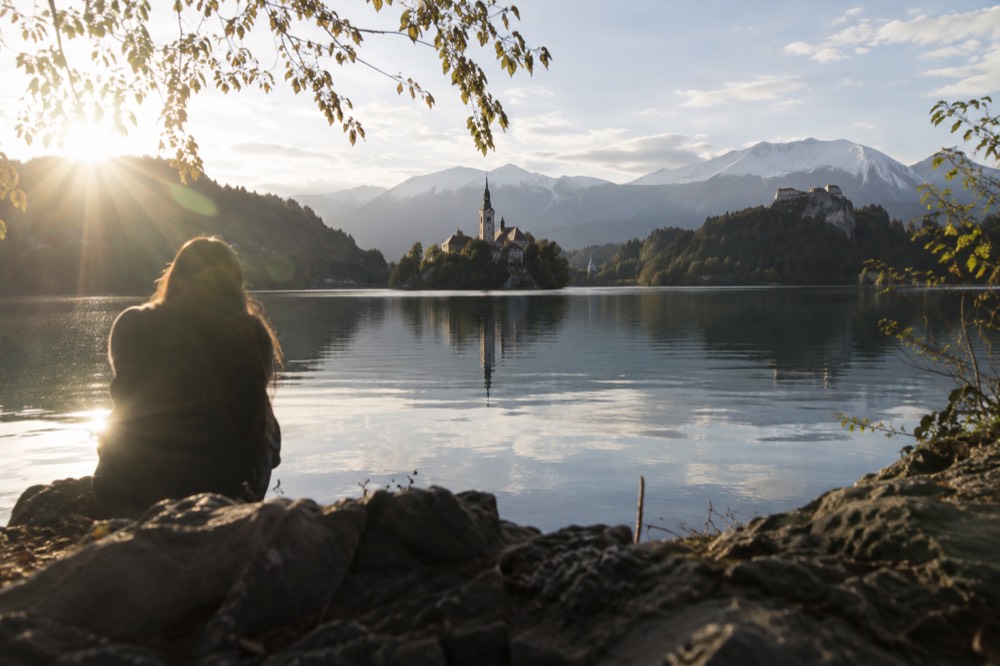
Yes, and it is the single most popular day trip from the city for a reason. Bled is a 6-hour tour from 57 USD, the lake has a walking path all the way round, a pletna boat to the island costs 20 EUR per person, and Bled Castle above the lake is 19 EUR for adults. The cream cake is the unofficial reward system. Save Vintgar Gorge for summer, it closes in winter.
The lake loop is flat, pram-friendly and about 6 km if you do the whole circuit, but most families do a stretch and then take the boat. The pletna, Bled's traditional flat-bottomed boat, carries visitors to the island at 20 EUR per person; the electric Bled Boat Line is the cheaper alternative at 16 EUR. Bled Castle sits on a cliff above the lake, 19 EUR for adults, with the classic postcard view. The guided day tour from Ljubljana, from 57 USD and rated 4.8 from 888 reviews, handles the transfer so nobody navigates a coach station with tired children.
One trap worth knowing: Vintgar Gorge, the wooden walkway river gorge near Bled, is open April to October and closed for winter, with the exact closing date depending on conditions, so check before promising it. Timed-entry slots apply in season and the operator says it is most crowded between 10:00 and 13:00, so an early slot is the family move. The adult ticket is 15 EUR.
If you want the full Bled planning picture, the Lake Bled guide covers boats, castle and timings in depth, and the small-group castle-and-island tour from 76 USD, rated 4.9 from 293 reviews, keeps numbers down if your children do better in small groups.
What Do We Do When It Rains in Ljubljana?
Have a museum morning: the national institutions are free on the first Sunday of every month, almost all close on Mondays, and the Museum of Illusions is open daily 09:00-21:00 at 16 EUR. Then reconsider the caves, which hold 10 C year round and run whatever the weather. Ljubljana's rain is concentrated in September and October, 147 mm each, so if you are visiting in autumn, book indoor backups early.
The climate data is more useful here than most guides admit. Ljubljana averages 1,362 mm of rain a year across 153 rain days, and the wettest months are September and October at 147 mm each, ahead of July's 115 mm, per ARSO's 1981-2010 normals. Fog is the other autumn surprise: ARSO's 1971-2000 series records 12.4 fog days in September and 12.4 in October, level with December and above January's 11.3. The early-autumn shoulder is not the dry, clear season people assume.
| Museum | Closed | Adult entry | Free first Sunday |
|---|---|---|---|
| National Gallery | Monday | 10 EUR | Yes |
| Museum of Modern Art | Monday | 7 EUR | Yes |
| Slovenian Ethnographic Museum | Monday | 8 EUR | Yes |
| Natural History Museum | Daily | 6.50 EUR | Yes |
| Museum of Illusions | Never | 16 EUR | No |
| City Museum of Ljubljana | Monday | 10 EUR | Check listing |
The first-Sunday rule is the money saver: the National Museum of Slovenia, the National Gallery, MSUM and the Slovenian Ethnographic Museum all publish free admission on the first Sunday of every month. If your visit spans a month boundary, plan the museum morning for that Sunday. The Natural History Museum, open daily, is the most child-friendly of the nationals; the Museum of Illusions style attractions fill the rest of a wet afternoon, and the full rainy day in Ljubljana guide has the complete list.
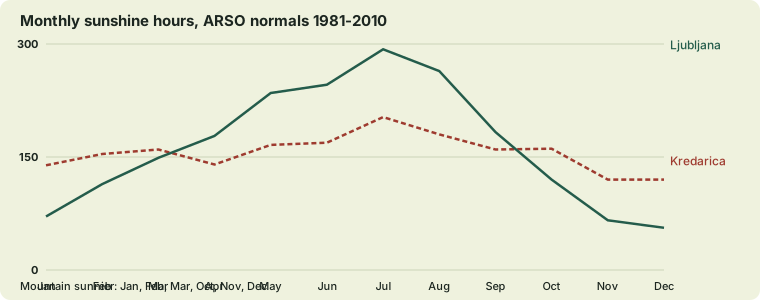
That basin inversion is the planning insight. On a grey, foggy day in the centre, the castle hill, Šmarna gora or the Bled side can be in full sun a few hundred metres higher. The sunshine numbers make the point: ARSO's 1981-2010 normals give Ljubljana 56 hours of December sunshine against 120 hours at Kredarica, 2,514 m up on Triglav. When the centre is grey, go up.
What Is Free or Nearly Free with Kids in Ljubljana?
A surprising amount: the castle grounds cost nothing, the free GuruWalk walks charge only what you tip, the pedestrian centre itself is the main attraction, and the central market, riverside and dragon hunting are all free. Budget families can fill two days with almost no spend beyond food, and the first-Sunday museum rule adds galleries at zero cost.
The castle grounds being free is the fact most visitors miss. You can walk up or ride the funicular, wander the courtyard and ramparts, and leave without buying an attractions ticket; the paid items are the tower, the exhibitions and the funicular itself. For children whose attention dies after twenty minutes indoors, that is the perfect arrangement.
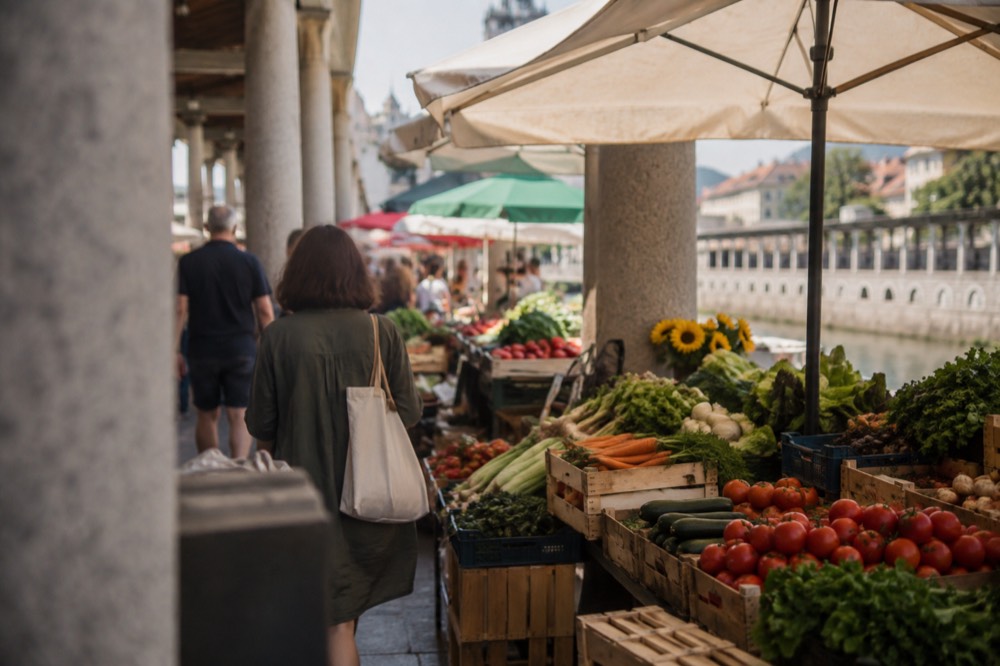
The central market on Vodnikov and Pogačarjev trg runs roughly Monday to Saturday, 06:00-18:00 in summer, and is a genuine morning activity: fruit stalls, bread, the covered halls, and on Fridays the Odprta Kuhna open-air food event on Pogačarjev trg, which runs roughly March to November and is cancelled in bad weather, so check the forecast. The free walking tour options are covered in their own guide, including the small-group snack walk on GuruWalk, rated 4.93 from 1,324 reviews, which pairs sights with Slovenian snack stops, though its listing notes the tastings carry a fixed extra cost, so it is free to join but not free in full.
The river itself is free to watch and cheap to ride. The embankments are the city's living room, and the 50-minute cruise at 15 EUR is the cheapest structured activity on the river. If you want the full budget breakdown, the Ljubljana for free and Ljubljana on a budget guides carry the complete list.
What Should Families Know Before Arriving?
Three things change behaviour: the centre is pedestrianised so you cannot drive to your hotel door, buses take no cash so set up contactless or an Urbana card on day one, and the airport is about 26 km out with bus times that must be checked rather than assumed. Everything else, including tourist tax at 3.13 EUR per person per night, is routine.
On the airport: Ljubljana Jože Pučnik Airport at Brnik is about 26 km from the city, and a shuttle bus runs into the centre, but times should be checked before travelling rather than assumed. The airport to city centre guide covers the options. On arrival, the pedestrianised centre means taxis and cars drop at the edge; plan luggage accordingly, or see the getting around Ljubljana guide.
On safety and language: Ljubljana is a calm, low-crime capital by any published measure, and English is widely spoken in tourism contexts; the is Ljubljana safe guide covers the specifics. On timing, the best time to visit Ljubljana guide pairs the weather data with the events calendar, and families visiting in December should read the Ljubljana in December guide, because the Christmas market changes the whole shape of a family visit.
Tourist tax is 3.13 EUR per person per night, comprising 2.50 EUR tax plus a 0.63 EUR promotion surcharge, with a half rate of 1.57 EUR for ages 7 to 18 and children under 7 exempt. It is charged at accommodation, not at attractions, so it does not affect daily planning. This site, Ljubljana Travel Guide, keeps the full price tables in its Ljubljana prices guide if you are building a family budget.
The last word on timing: two nights is the typical stay. The city recorded 1,392,728 tourist arrivals and 2,844,129 overnight stays in 2025, an average of about 2.04 nights per visit, which is the market telling you the honest answer: two days in the city plus one day trip, cave or Bled, is the Ljubljana-with-kids formula that fits almost everyone.
Common Questions About Ljubljana with Kids
Is Ljubljana a good city to visit with children?
Yes. The centre is pedestrianised, the castle funicular removes the one steep climb, the river offers short boat trips, and the main day trips, Postojna Cave and Lake Bled, are both structured around short attention spans. The city is compact enough that most families walk everywhere.
How many days do you need in Ljubljana with kids?
Two days in the city plus one day trip is the standard formula, matching the average stay of about two nights. Day one covers the castle, river and old town; day two the museums or Tivoli Park; day three the cave or Bled.
Is Ljubljana Castle worth it with kids?
Yes, and the grounds are free, so you can ride the funicular up and wander without an attractions ticket. The paid ticket, 19 EUR for adults including the funicular return, covers the Viewing Tower and exhibitions. The funicular itself is usually the children's favourite part.
What is the best day trip from Ljubljana with children?
Postojna Cave, because the visit includes an underground train ride and the cave holds 10 C year round, so it works in any weather. The combined tour with Predjama Castle runs 6 hours from Ljubljana and includes tickets and transport.
Do buses in Ljubljana take cash?
No. City buses accept an Urbana card, 2.00 EUR to buy, or a contactless bank card or phone tapped on board. A single zone 1 ride is 1.50 EUR including transfers for 90 minutes.
What can you do in Ljubljana with kids when it rains?
Museums: the national institutions are free on the first Sunday of every month, the Museum of Illusions is open daily 09:00-21:00, and the caves an hour away run in any weather at a steady 10 C. Note that September and October are the wettest months, at 147 mm of rain each.