Tivoli Park: A Complete Guide to Ljubljana's Biggest Green Space
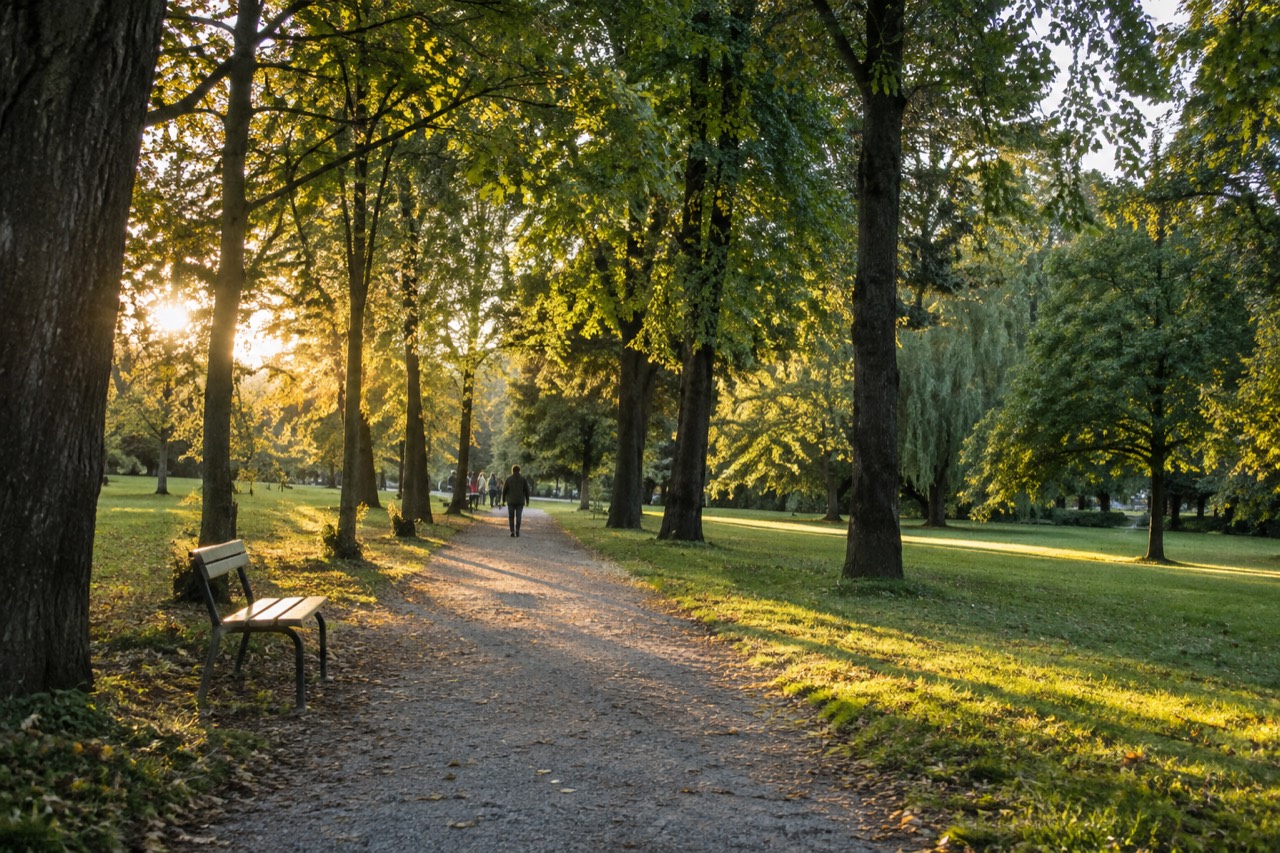
Tivoli Park is the green lung at the western edge of Ljubljana's pedestrianised centre, a five-minute walk from the Old Town and the gateway to the wooded Rožnik hill above the city.
Short answer
Tivoli Park is Ljubljana's largest park, a public green space with no gate and no ticket, starting about ten minutes on foot from Prešeren Square. Locals use it for jogging, picnics and the walk up Rožnik. Entry is free, the centre's buses reach its edge, and a bike tour is the fastest way to see it with a guide.
What Is Tivoli Park, and Why Do Locals Treat It as Their Front Garden?
Tivoli Park is Ljubljana's largest public park, a broad green belt of lawns, tree-lined avenues and woodland that begins at the western edge of the city centre and climbs toward Rožnik hill. It has no entrance gate, no ticket office and no closing time as a public space, which is exactly why it functions as the city's shared garden rather than a sight you queue for.
The park sits at the top of the pedestrianised centre, so the walk from the Three Bridges area merges into parkland almost without a seam. That geography matters. Ljubljana's historic core is closed to general motor traffic, a pedestrian zone of roughly 20 hectares that has been progressively expanded since 2007, and Tivoli is effectively its green continuation: you leave the streets behind and keep walking. The city's own mobility pages describe the centre's car-free expansion, and the park is the natural beneficiary of it.
Locals treat the park as everyday infrastructure rather than an attraction. Morning joggers use the long straight avenue that runs uphill through the middle of it. Families spread across the lawns on summer evenings. In winter the same lawns become the city's most convenient snowfield, because snow cover is a real feature of Ljubljana winters: ARSO's 1981-2010 normals record 50 days a year with snow on the ground at 07:00 in the city, with the deepest recorded cover at 89 cm in January. The park is where that snow gets used.
For a visitor, the practical point is simpler. Tivoli is the place where a city break stops feeling like a city break. You can be in the middle of it within fifteen minutes of stepping out of a hotel in the centre, and from its upper edges the land continues upward into forest. The park is not a detour from Ljubljana; it is the city's western half, and it rewards an hour as much as it rewards a whole afternoon.
How Do You Get to Tivoli Park from the City Centre?
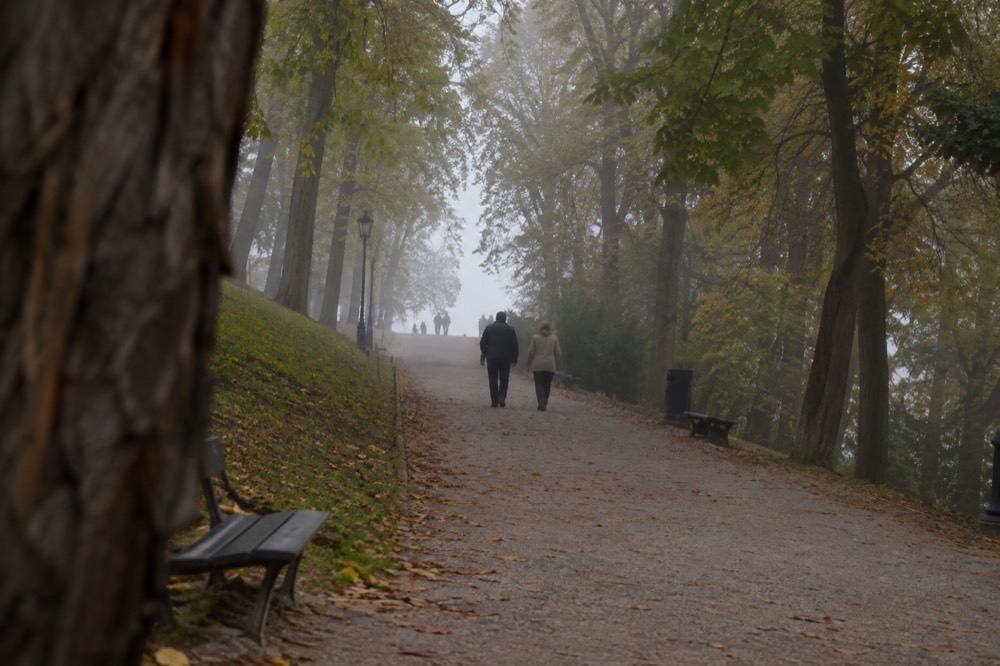
On foot is the honest answer: the park begins roughly ten minutes' walk from Prešeren Square, and because the centre is pedestrianised you never have to cross heavy traffic to reach it. If you would rather ride, Ljubljana's city buses take contactless bank cards directly, a single zone 1 fare costs 1.50 EUR and covers 90 minutes including transfers, and cash is not accepted on board at all.
The walk itself is part of the visit. From Prešeren Square you follow the pedestrian streets westward, cross the river, and the gradient begins gently as the park's lower avenues open up. There is no point where you pass a boundary or pay anything; the transition from city to park is a matter of tree cover thickening.
For anyone staying further out, or arriving from the bus or train station, the bus network is the practical option. The payment rules are the detail most visitors miss. The Urbana card costs 2.00 EUR to buy and a single ride in zone 1 is 1.50 EUR for 90 minutes of travel including transfers, but LPP, the city operator, is explicit that cash does not work on board. Contactless Visa, Mastercard and mobile wallets do, which removes the old trap of needing a card before you could board at all. Cards and top-ups are sold at the LPP Passenger Centre on Slovenska 56, at Urbanomat machines, kiosks, tourist information centres and post offices.
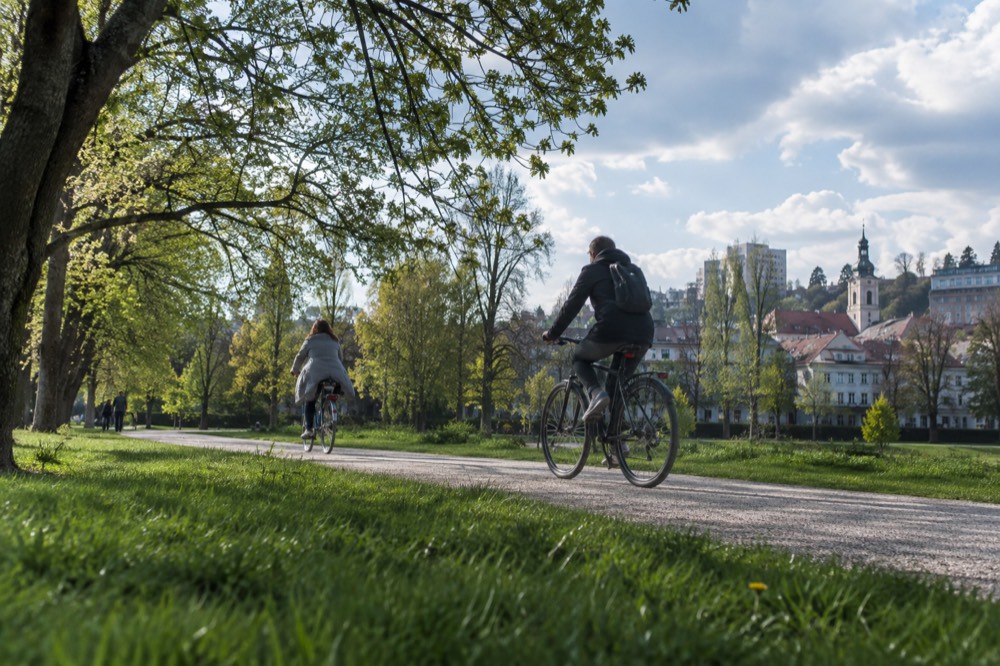
Cycling is the third option and arguably the best one. Ljubljana is flat, compact and bike-friendly by design, and the car-free centre makes a bicycle the fastest way to move between the Old Town, the riverbank and the park. A guided ride stitches all three together, which is why a bike tour is the tour format that fits Tivoli most naturally.
The trio above is a deliberate spread. The Street Art and Culture Bike Tour, 3 hours and rated 4.5 from 85 reviews, takes in the city's street art and culture on two wheels, and the park's edges are part of that story. The Experience Ljubljana Bike Tour runs 3 to 4 hours with a perfect 5 rating from 8 reviews. The Postojna Cave and Predjama Castle day trip, 6 hours and rated 4.8 from 2802 reviews, is the contrast pick: it is what you book instead when the weather closes in, because caves hold roughly the same temperature year round and are the reliable wet-weather answer anywhere in this region.
What Are the Best Walks Inside Tivoli Park?
The main avenue is the spine of the park: a long, straight, tree-lined gravel path that climbs from the lower lawns toward the upper park and the slopes of Rožnik. From its top end, marked walking trails continue into the wooded hill above, and Šmarna gora, the city's other great walking hill, is a separate outing to the north. Give the lower park an hour, and half a day if you intend to climb.
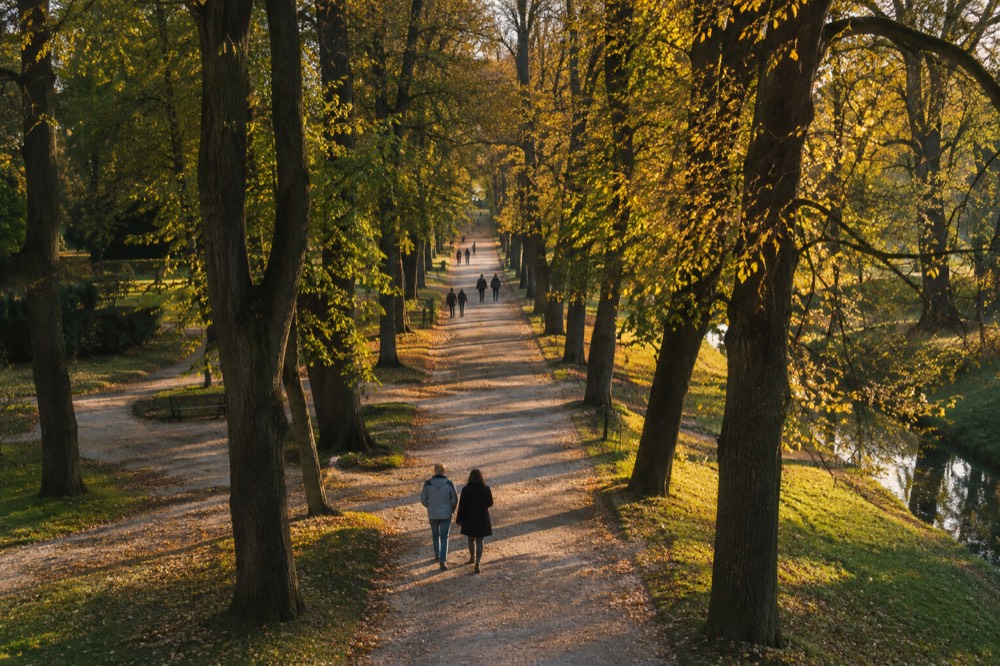
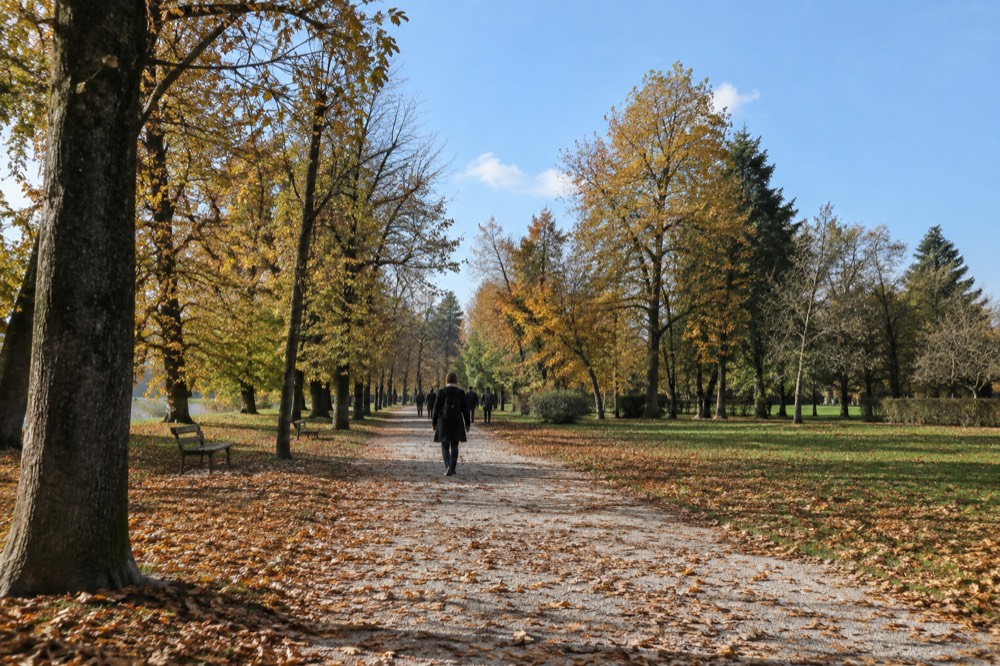
The lower park is the part almost every visitor sees. Broad lawns flank the main avenue, and the avenue itself is the park's most photographed line, a chestnut-shaded corridor that local photographers use in every season. In autumn it is the single best leaf-viewing walk inside the city limits; in winter the same trees frame the snow; in summer the shade makes it the coolest walk in the centre.
Above the formal park, the land keeps rising. Rožnik, the forested hill on the park's western edge, is crossed by walking trails that locals use as an after-work climb, and it connects directly to the botanical and zoological interest of the wider Tivoli-Rožnik area. This is where the park stops being a garden and becomes a hillside. If you only do one climb from the centre without a car, Šmarna gora is the famous one, and the guide to Šmarna gora covers it in full, but Rožnik has the advantage of starting five minutes from the Old Town.
Two shorter loops are worth naming. The first circles the lower lawns and takes twenty to thirty minutes at a stroll, which is the right pace for the tree cover. The second follows the park's outer edge toward the northern end and back along the main avenue, which takes about an hour and shows you both the formal and the wild halves of the space.
If you would rather have someone else lead, the guided options divide cleanly. A walking tour covers the centre and the castle; a bike tour covers the centre, the riverbank and the park in one loop. The Ljubljana walking tour guide compares the formats, and the getting around Ljubljana guide covers the transport layer underneath them.
Is Tivoli Park a Good Option When the Weather Turns?
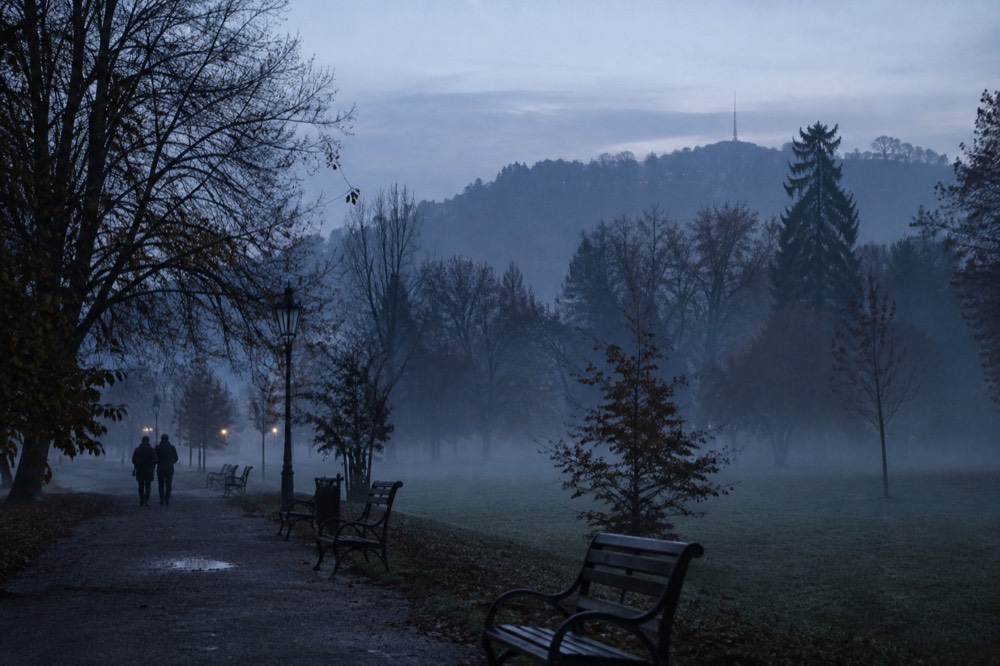
Yes, with one caveat: the park itself is a fair-weather space, but its position makes it the best base in the city for the classic Ljubljana weather move, which is to go up. When the basin fogs in, the hills a few hundred metres above are often in sunshine, and the walk from the park toward Rožnik is the cheapest way to climb out of the grey.
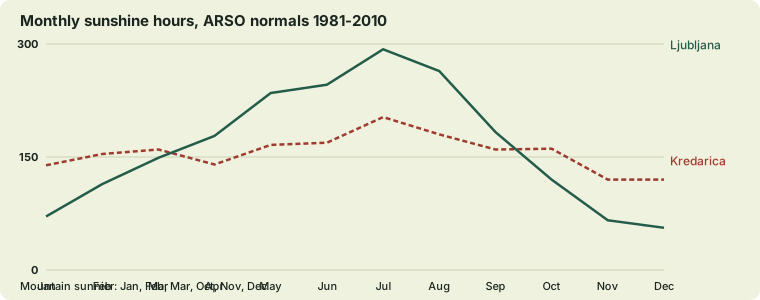
Here is the fact that most guides to this city never mention, and it is the single most useful thing to know about Ljubljana weather. Ljubljana sits on the floor of a basin at 299 m. In the colder half of the year, cold air is trapped under warmer air above, and the city sits under fog and low cloud while the high ground a few hundred metres up is in sun. ARSO's own climate normals, 1981 to 2010, put numbers on it: Ljubljana gets 56 hours of sunshine in the whole of December and just 2 clear days that month, while Kredarica, at 2514 m on Triglav, gets 120 hours and 6 clear days over the same December. In January the mountain records 139 hours against the city's 71.
The lines cross. The city wins April to September and loses October to March. So a winter visitor's best move is not to stay on the basin floor but to gain height, and Tivoli is where that climb starts. The park's upper trails rise into the Rožnik woods, and on a foggy morning the transition from grey to gold happens partway up the hill. On the day scale, the temperature at 660 m can exceed the temperature at 299 m; on the monthly scale the mountain is still far colder on average, so the claim is about sunshine and fog, not warmth.
The second weather fact is the autumn one. ARSO's 1971-2000 normals, the only period for which fog is published, give Ljubljana 91.2 days with fog per year, and the foggiest months are not midwinter but September and October at 12.4 fog days each, level with December's 12.6 and above January's 11.3. The same 1981-2010 table makes September and October the joint wettest months at 147 mm each, above July's 115 mm. Autumn in Ljubljana is not the dry shoulder season people assume. If you are visiting in those months, plan the park for the morning after fog burns off, or climb above it.
| Weather fact | Figure | Period |
|---|---|---|
| Sunshine, December, Ljubljana | 56 hours | 1981-2010 |
| Sunshine, December, Kredarica (2514 m) | 120 hours | 1981-2010 |
| Clear days per year, Ljubljana | 37 | 1981-2010 |
| Overcast days per year, Ljubljana | 130 | 1981-2010 |
| Fog days, September and October | 12.4 each | 1971-2000 |
| Rainfall, September and October | 147 mm each | 1981-2010 |
| Snow-cover days per year at 07:00 | 50 | 1981-2010 |
When the weather is genuinely bad rather than merely grey, the honest answer changes. The park stops being pleasant in steady rain, and the reliable alternative is underground: caves hold roughly 10 C at Postojna year round, which is why a cave day trip is the region's standard wet-weather answer. The rainy day in Ljubljana guide lists the full set of options.
When Is the Best Time of Year to Visit Tivoli Park?
April through September is the comfortable window, and the park's own seasonal rhythm follows the city's climate: mean temperatures run from 10.8 C in April to 21.3 C in July, and the long summer evenings, with July averaging 293 sunshine hours in the city, are when the lawns fill. October is the park's most photogenic month for autumn colour, but it is also one of the two foggiest and wettest months of the year, so go early and go up.
The park earns its keep in every season, but the seasons are not equal. Spring brings the lawns back to life and the tree-lined avenue into blossom. Summer turns the park into the city's evening living room, with the highest sunshine totals of the year and mean daily maxima of 27.3 C in July and 26.7 C in August. Autumn is the colour season, and the chestnut avenue is the best leaf walk inside the city. Winter strips the trees and, on 50 mornings a year on average, lays snow across the lawns. The full index of guides sits on Ljubljana Travel Guide.
| Month | Mean temp (C) | Rain (mm) | Sunshine (h) | What the park is doing |
|---|---|---|---|---|
| March | 6.5 | 88 | 149 | Lawns greening, trees still bare |
| April | 10.8 | 99 | 178 | Blossom on the main avenue |
| May | 15.8 | 109 | 235 | Full green, picnic season starts |
| June | 19.1 | 144 | 246 | Long evenings, busiest lawns |
| July | 21.3 | 115 | 293 | Peak summer, shade at a premium |
| August | 20.6 | 137 | 264 | Warm evenings, thunderstorms possible |
| September | 16.0 | 147 | 183 | First colour, foggy mornings |
| October | 11.2 | 147 | 120 | Best autumn leaves, 1 clear day on average |
| November | 5.6 | 129 | 66 | Bare trees, overcast (17 days a month) |
| December | 1.2 | 107 | 56 | Snow possible, short days |
All figures are ARSO's 1981-2010 normals for the Ljubljana Bežigrad station, the standard published series for the city. Two rows deserve a second look. October averages a single clear day, tied with November for the cloudiest in the year, yet it delivers the park's best colour. December's 56 sunshine hours mean under two hours a day, which is why the winter strategy is height, not patience.
The best time to visit Ljubljana guide works through the same numbers for the city as a whole, and the Ljubljana in winter guide covers the cold half of the year, including the December Christmas market.
Can You See Tivoli Park on a Tour?
Yes, and a bike tour is the format that fits it best: the park sits on the natural loop between the Old Town, the Ljubljanica riverbank and the western edge of the centre, so a two or three hour ride covers it without detouring. The Street Art and Culture Bike Tour, 3 hours at 4.5 from 85 reviews from 39, is the one most visitors pick, and it is the tour this site pairs with the park.
The bike format works because of the city's layout. The centre is pedestrianised, the distances are short, and the park's avenues are rideable, so a guide on two wheels can move a group from the riverside to the upper park and back inside a morning. The Street Art and Culture Bike Tour is the mid-market pick: 3 hours, rated 4.5 from 85 reviews, from 39. The Experience Ljubljana Bike Tour runs 3 to 4 hours, holds a 5 rating from 8 reviews and starts from 34, which makes it the small-listing alternative for riders who want a longer loop.
Walking formats reach the park's lower edge but rarely its upper trails, because a walking tour's time budget goes to the Old Town and the castle. That is not a failure of the walks, just a difference in scope. The free tips-based walks that run in Ljubljana, booked through GuruWalk, cover the central sights; the park appears on the horizon rather than the itinerary. If the park is a priority for you, ride rather than walk.
If you have already done the city by bike and by foot, the park also pairs well with an afternoon on the river. The electric boat trips on the Ljubljanica run 50 minutes, are rated 4.6 from 149 reviews and start from 17, and the riverbank landing is a short walk from the park's lower gate, so the two make a natural half-day pairing: wheels in the morning, water in the afternoon.
For the climb rather than the park itself, a guided hike changes the scale of the day. The Velika Planina Guided Hike, 6 hours and rated 4.8 from 74 reviews from 86, takes you to an alpine herdsmen's village in the Kamnik Alps, which is a different order of walking than Rožnik, and a fair upgrade if the basin fog has you wanting serious height.
| Tour | Format | Duration | Rating | From |
|---|---|---|---|---|
| Street Art and Culture Bike Tour | Bike, city and park | 3 hours | 4.5 (85 reviews) | $39 |
| Experience Ljubljana Bike Tour | Bike, longer loop | 3-4 hours | 5 (8 reviews) | $34 |
| Electric Boat, 50 Minutes | River cruise | 50 minutes | 4.6 (149 reviews) | $17 |
| Velika Planina Guided Hike | Guided hike, Alps | 6 hours | 4.8 (74 reviews) | $86 |
| Postojna Cave and Predjama, 5h 30m | Cave day trip | 5h 30m | 4.9 (474 reviews) | $80 |
What Else Is Within Walking Distance of Tivoli Park?
The park's lower edge is about ten minutes from Prešeren Square and the Old Town, fifteen from the funicular base for Ljubljana Castle, and it backs directly onto the Rožnik woodland, so it works as either the start or the finish of a day spent entirely on foot. The Old Town and the castle are the two anchors most visitors combine with it.
Walking out of the park's eastern edge points you straight back into the pedestrianised core. The Ljubljana Castle guide covers the hill above the Old Town; the castle grounds are free to enter, while the funicular and the tower are not, with a castle ticket including the funicular at 19.00 EUR for an adult. The funicular runs 09:00-22:00 from May to September and 09:00-19:00 the rest of the year, and the castle is open 365 days a year.
To the south, the river. The Ljubljanica river cruise guide covers the boat trips, and the riverbank between the park and the Triple Bridge is one of the city's best short walks. The Triple Bridge and Prešeren Square guides cover the two landmarks you will cross on the way.
For architecture readers, one more name belongs on this list. Jože Plečnik, the architect whose interjections shape half the centre, has his former house preserved as a museum in the Trnovo district, south of the centre across the river. The Plečnik House is guided-entry only, with tours on the hour and a 12 EUR ticket including the guide, so it needs a little planning rather than a casual drop-in. The Plečnik's Ljubljana guide traces his work across the city.
| Nearby | Direction from park | Walking time | Entry |
|---|---|---|---|
| Prešeren Square | East, into the centre | About 10 min | Free public space |
| Ljubljana Castle | East, above the Old Town | About 15 min to funicular base | Grounds free; ticket with funicular 19.00 EUR |
| Ljubljanica riverbank | South-east | About 10 min | Free; boat trips from 15 EUR |
| Plečnik House | South, across the river | About 30 min | 12 EUR, guided tours on the hour |
| Rožnik woodland | West, from the upper park | Immediate | Free public space |
Is Tivoli Park Free, and What Does a Visit Actually Cost?
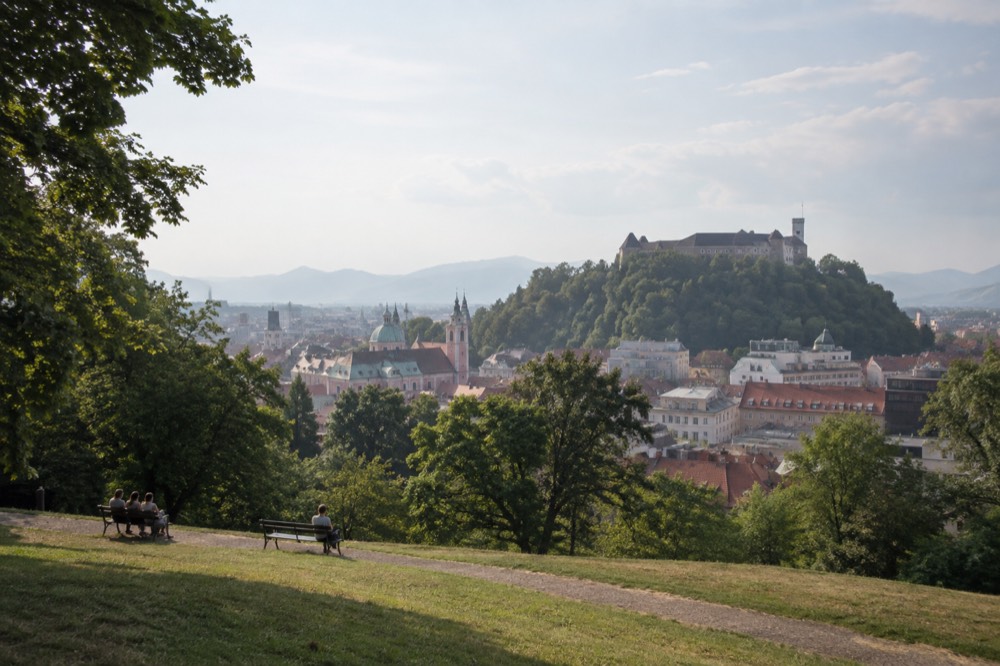
The park itself costs nothing: it is an ungated public space, open around the clock, and the only money you might spend is transport to its edge, a 1.50 EUR bus ride if you do not walk, or a bike tour ticket if you want a guide. That makes it one of the genuinely free things to do in Ljubljana, and one of the few large ones.
The free list in this city is shorter than people expect, so it is worth being precise about what costs what. The park: free. The pedestrian centre you walk through to reach it: free. The castle grounds: free, though the funicular, the tower and the exhibitions inside are not. The museums: paid, except on the first Sunday of every month, when the national institutions, including the National Gallery, MSUM and the Slovenian Ethnographic Museum, open free of charge. The Ljubljana for free guide collects the full set.
If you are building a paid day around the free park, the honest arithmetic looks like this. A bus ride in is 1.50 EUR. A bike tour starts from 34. A castle ticket with the funicular is 19.00 EUR. A river cruise is about 15 EUR with Barka, whose 50-minute trips run from the Breg landing. The Ljubljana Card bundles the funicular, the river cruise, city buses, a guided walking tour and more than thirty museums into one pass at 41.00 EUR for 24 hours, and the Ljubljana prices guide puts every line item side by side.
One cost nobody budgets for is the tourist tax, because it is usually buried in the room rate: 3.13 EUR per person per night in Ljubljana, half rate for ages 7-18, children under 7 exempt. You will not pay it at the park gate, but it is on your hotel bill, and now you know what the line means.
What Should You Know Before You Go?
Three things carry the practical weight: the centre is pedestrianised so plan the last stretch on foot, buses take contactless cards but never cash, and the park has no facilities schedule of its own, so treat it as open land and carry what you need. Beyond that, the usual Slovenian basics apply: the country is in the EU, the eurozone and the Schengen area, so there is no currency to change and no border to clear arriving from Italy, Austria, Hungary or Croatia.
The pedestrianisation is the fact that reshapes every arrival. If you come by car, you park at the edge of the zone and walk, and the park's eastern approaches are inside or beside that zone. The city's own pages describe the historic centre as a pedestrian area of roughly 20 hectares, expanded progressively since 2007, and Tivoli's lower avenues sit immediately at its western boundary.
The bus rules are the second. Cash does not work on board, full stop. A contactless bank card or phone does, at the same 1.50 EUR zone 1 fare, and the Urbana card remains the option for anyone who prefers one. Buy or top up at the LPP Passenger Centre on Slovenska 56, at Urbanomat machines, kiosks, tourist information centres or post offices.
The third is seasonal honesty. The park in October is a coin toss between the best colour of the year and a grey, drizzly morning with fog, and the climate table above tells you the odds. The park in December is short on daylight, with 56 sunshine hours across the whole month, so an afternoon visit means arriving by early afternoon. Neither is a reason to skip it; both are reasons to time it.
Finally, the status sentence that matters for every itinerary in this country: Slovenia is in the European Union, uses the euro, and is inside the Schengen area. Land and sea internal border checks were abolished on 21 December 2007 and air checks on 30 March 2008, and Croatia joined both Schengen and the euro on 1 January 2023, so even the Zagreb day trip is an internal journey. There is no border formalities paragraph to plan for, only the park.
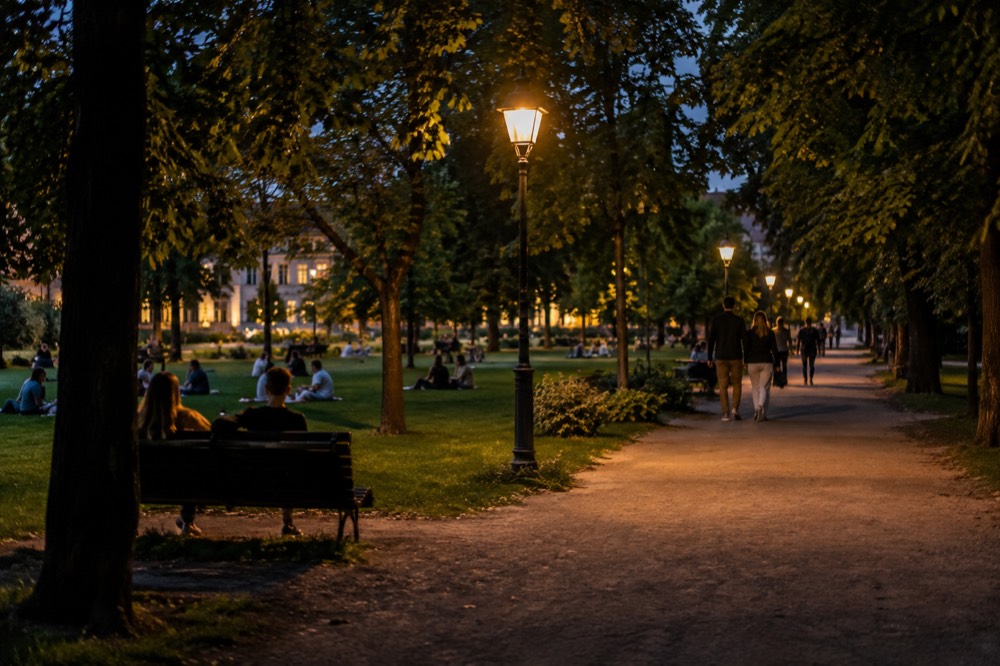
Tivoli Park is the quiet constant in a city that is otherwise made of bridges, hills and riverbanks. It asks nothing of you, not even a ticket, and it hands back the two things a two-night city break rarely finds: space, and a hill to climb out on. Ljubljana averages about 2.04 nights per visitor, and the park is the one sight that fits into any fragment of that stay, from a half-hour stroll to a half-day climb. If the fog is down, go up. If the sun is out, go slow.
Common Questions About Tivoli Park
Is Tivoli Park free to visit?
Yes. The park is an ungated public space with no ticket office and no entry charge. The only costs are optional: a 1.50 EUR bus ride to its edge, or a guided bike tour if you want a local alongside you.
How far is Tivoli Park from the city centre?
The park's lower edge begins roughly ten minutes on foot from Prešeren Square, and the walk stays inside the pedestrianised centre almost the whole way. The upper park and the Rožnik trails add another thirty to sixty minutes of walking uphill.
Can you walk from Tivoli Park up Rožnik?
Yes. The park's main avenue climbs toward the upper park, and marked trails continue from there into the Rožnik woodland. It is the closest hill walk to the centre, and on foggy mornings it is the fastest way to climb above the basin grey.
What is the best time of year to visit Tivoli Park?
April to September for green lawns and long evenings, with July averaging 293 sunshine hours in the city. October for autumn colour, with the caveat that it is one of the two foggiest and wettest months of the year at 12.4 fog days and 147 mm of rain.
Can you see Tivoli Park on a tour?
Yes, best by bike. The Street Art and Culture Bike Tour runs 3 hours and covers the park as part of a city loop, and the Experience Ljubljana Bike Tour runs a longer 3 to 4 hour version. Walking tours reach the park's edge but rarely its upper trails.
Is Tivoli Park good in winter?
Yes, with adjusted expectations. The city averages 50 mornings a year with snow cover and only 56 hours of December sunshine, so the park is quiet, white and short on daylight. The winter move is to climb toward Rožnik, where the inversion layer often ends partway up.