Idrija from Ljubljana: Mercury, Lace and the Hills of Western Slovenia
Idrija is the day trip from Ljubljana that most visitors never hear about: a former mercury mining town folded into the hills of western Slovenia, famous for hand-made lace and a food tradition all of its own.
Short answer
Idrija sits west of Ljubljana in the hills of western Slovenia and works as a relaxed day trip by car or bus, or as a stop on a longer karst loop. The town is known for its mercury mining heritage and its bobbin lace, and it pairs naturally with Postojna Cave, whose tickets run 34.90 EUR for an adult. Allow a full day if you combine the two.
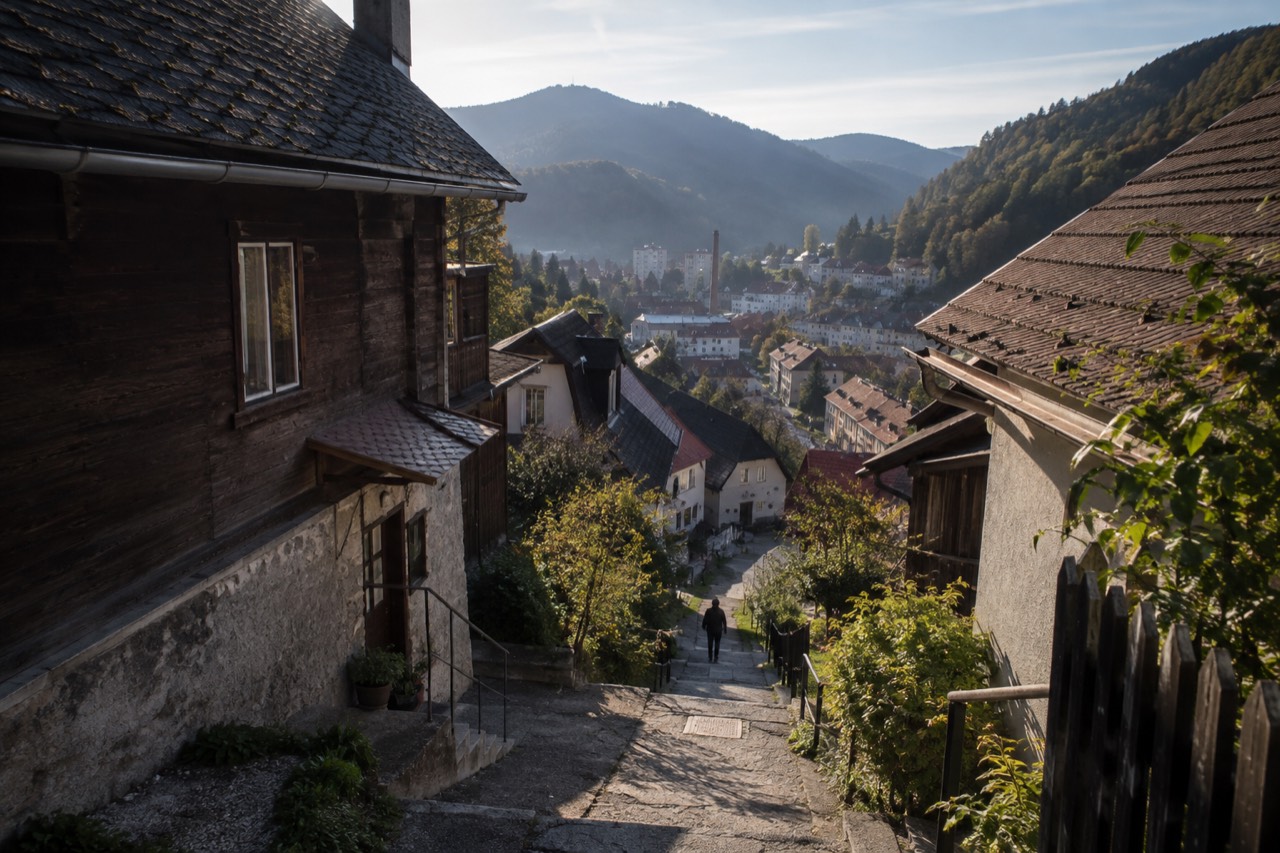
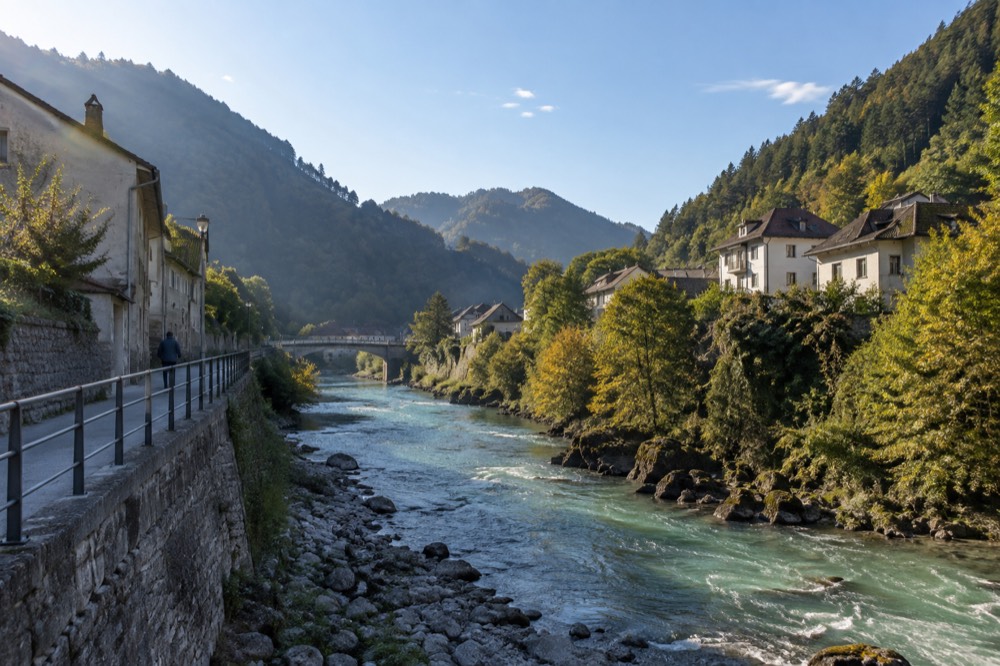
Idrija does not look like a town with a dramatic past. It sits in a narrow valley where the Idrijca river cuts through the hills of western Slovenia, its streets stacked on the slopes, its houses the colour of weathered timber and slate. For centuries, though, this was one of the most important mining towns in Europe. Mercury from Idrija went out into the world, and the wealth it produced paid for churches, mansions and a working-class lace tradition that still runs classes and festivals today.
That double inheritance, ore and thread, is what makes the town worth the drive from Ljubljana. It is a genuinely local experience in a country where the headline day trips, Lake Bled and Postojna Cave, can feel like a conveyor belt. This guide covers how to get there, what to actually do with a day, how to pair Idrija with the karst sights to the south, and what the trip costs once you add up tickets and tours. Everything below is built from verified figures and the bookable options that run from the capital, so you can plan the day without guesswork.
How Do You Get from Ljubljana to Idrija?
Idrija lies west of Ljubljana in the hills of western Slovenia, and the drive is a straightforward one on the motorway towards the coast before turning off into the Idrijca valley. There is no rail line to the town, so your realistic options are your own car, a regional bus, or a guided day trip that folds Idrija into a wider loop. The car is the most flexible and the guided tour is the least work.
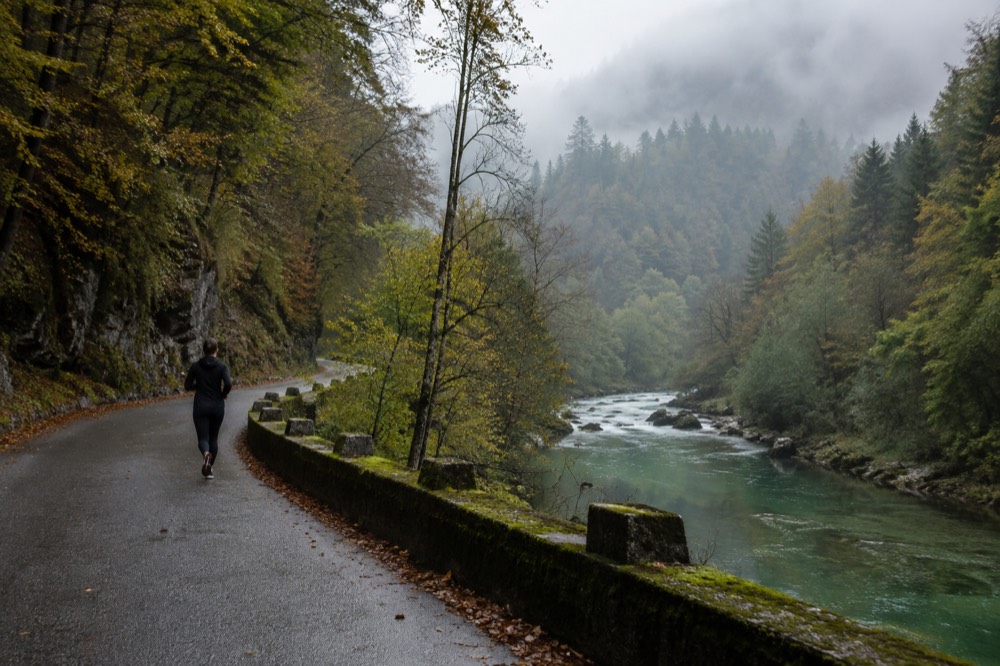
The route matters less than the rhythm. Leaving Ljubljana, the motorway drops south-west through the Ljubljana basin, and within a short stretch the flat fields give way to forested ridges. The final approach follows the Idrijca, a river the colour of green glass in the right light, hemmed in by hills that get steeper the closer you get to town. If you are driving yourself, this last stretch is the part worth slowing down for.
A few practical notes for the drive itself. Slovenia is in the European Union and the eurozone, so there is no border formality or currency change arriving from Austria or Italy, and the country has used the euro since 1 January 2007. Ljubljana's historic centre is pedestrianised, so if you are hiring a car for the day, collect it away from the old streets and plan to park on the edge of town before you set off. The airport at Brnik sits about 26 km from the city, which matters if you are attempting this trip on an arrival day, though that is not recommended.
The bus is the budget option and it works, with the usual caveat that regional timetables in Slovenia thin out at weekends, so check the day's departures before committing. The honest answer on fares and journey times is that they should be confirmed against the operator's own timetable when you book, because schedules shift between seasons. What the bus does give you is a stress-free run through the same scenery, and a drop-off close enough to the town centre to walk everywhere Idrija has to offer.
The three ways to run the day, side by side:
| Option | Best for | Watch out for |
|---|---|---|
| Own car | Flexibility, adding Idrija to a karst loop | Pedestrianised centre in Ljubljana; park on the edge |
| Regional bus | Travellers who would rather not drive | Thinner weekend timetables; confirm departures |
| Guided day trip | Zero logistics, tickets included | Standard group tours skip Idrija itself |
The third option is to let someone else drive. Most guided day trips from Ljubljana route to the headline sights, but the karst and cave tours can be paired with an Idrija stop if you are booking privately, and the small-group tours of the Julian Alps and the Soča valley run through the same hill country. The full Triglav National Park tour and the Soča and Kranjska Gora day tour both show you the bigger landscape Idrija belongs to, if the town itself proves hard to reach on your dates.
What Is Idrija Famous For?
Idrija is famous for two things: mercury and lace. For roughly five centuries its mine was one of the world's great sources of mercury, and the mining wealth shaped everything from the town's architecture to its social history. When the mine closed, the heritage remained, and today the mercury mining heritage is recognised internationally while the town's hand-made bobbin lace, once a miners' wives' cottage industry, is taught, exhibited and celebrated as a living craft.
The story is genuinely unusual. Mercury ore was discovered here in the late fifteenth century, and the mine that followed grew into one of the largest mercury operations the world had seen, second only to Almadén in Spain. That comparison is not a throwaway: the two sites share a place on the UNESCO World Heritage list as a joint inscription, which puts Idrija in the same conversation as Slovenia's better-known heritage sites even though almost no overseas visitor has heard of it. The mining landscape, the shaft buildings and the workers' housing are all part of what is protected.
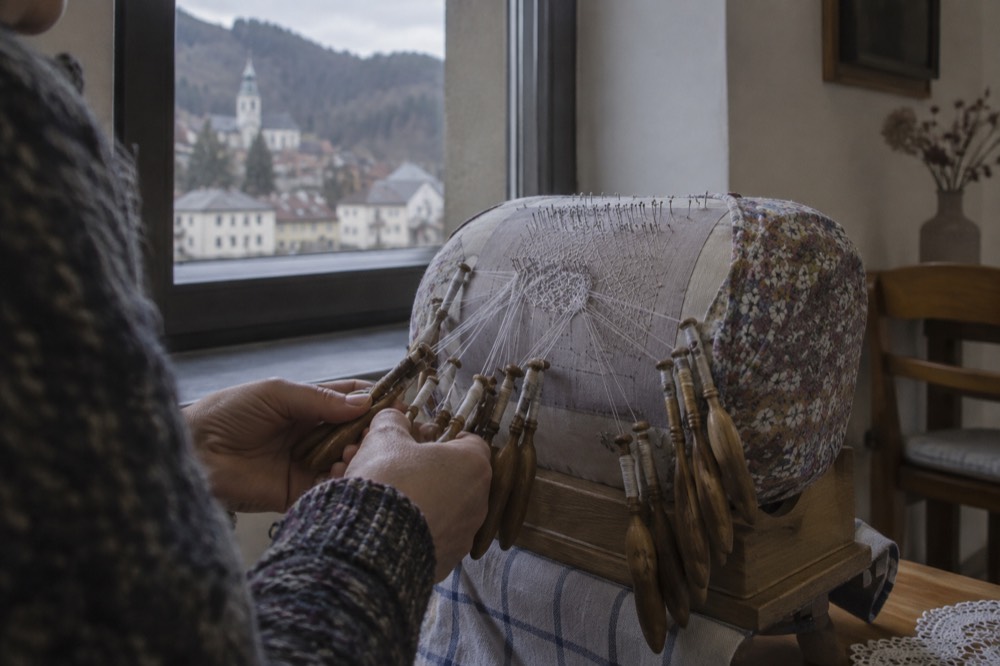
Lace came later and from an unexpected direction. Bobbin lace-making is said to have been taught in Idrija so that miners' families could earn money when the ore ran thin, and the craft took root so deeply that the town built its identity around it. The lace school has operated for well over a century, and the Idrija Lace Festival each summer fills the streets with demonstrations, exhibitions and markets. You can watch lacemakers at work in the town museum, where the displays sit alongside the mining collection, one building holding both halves of the town's history.
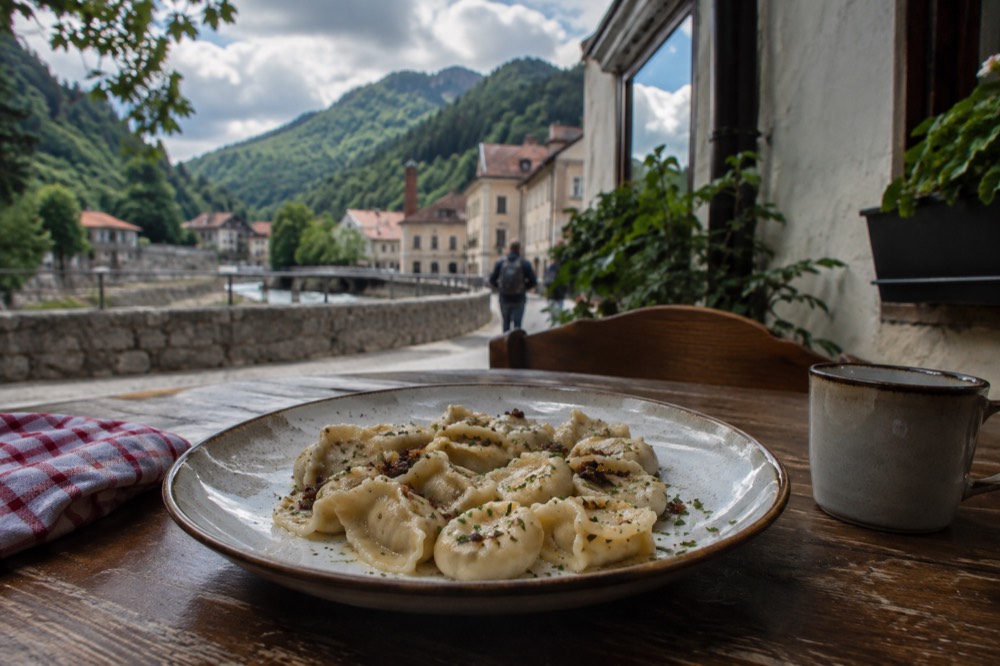
What surprises most visitors is the food. Idrija gave Slovenia one of its signature dishes, žlikrofi, small hand-pinched dumplings usually filled with potato and served with a meat sauce or simply dressed with butter and breadcrumbs. They carry protected status as a traditional Slovenian speciality, and in Idrija itself they appear on menus in every form, from the classic preparation to festival portions. Between the lace, the ore and the dumplings, the town has more distinct threads to pull on than most places three times its size.
For context on how Idrija fits the wider picture, our guide to what Slovenia is most famous for covers the national headline acts, and the piece on hidden gems in Ljubljana looks at lesser-known sights closer to the capital. Idrija belongs in that same register: the thing locals know and guidebooks skim past.
What Can You See and Do in Idrija in a Day?
A day in Idrija divides naturally into three: the mining heritage around the old mine complex, the lace and museum collections in the town centre, and the river valley scenery on the doorstep. Most visitors manage the mine site and the museum with a long lunch of žlikrofi in between, then finish with a walk along the Idrijca. If you add the wild gorge just upstream of town, you have a full and varied day that never feels rushed.
Start at the mine. The surface buildings of the heritage site include the towering shaft structure and the machinery that kept the mine running, and the guided visit takes you into the story of how mercury was extracted and what life underground was like. The technical detail is genuinely interesting even for visitors with no mining background, because mercury is an element with a personality: liquid at room temperature, poisonous in the wrong hands, and once so valuable that empires fought over access to it. The site's own visitor information is the place to confirm current opening hours and admission before you travel.
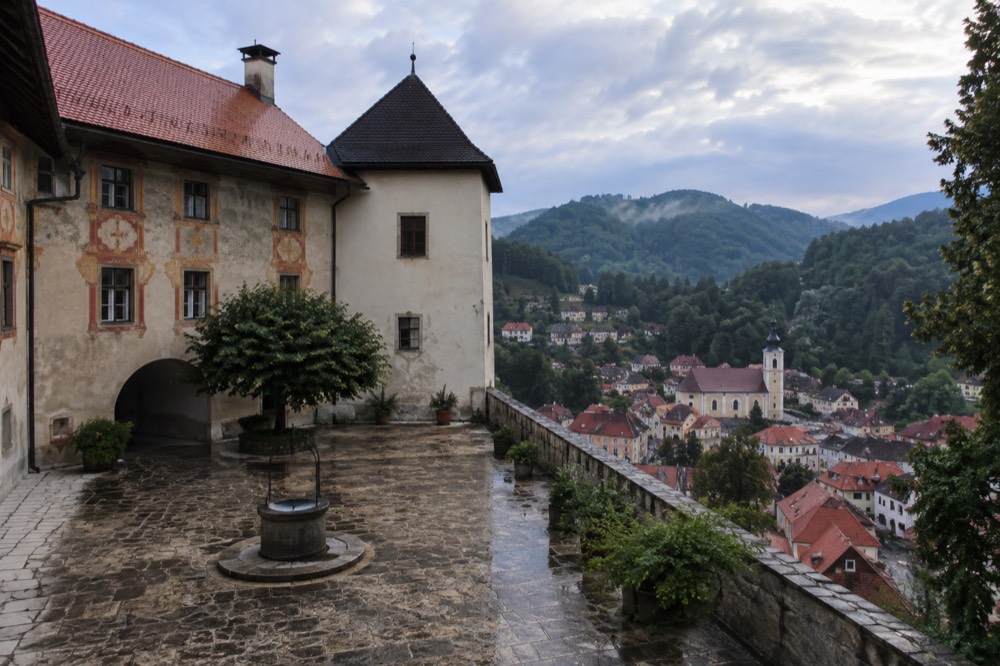
The town museum occupies Gewerkenegg Castle, the fortified mansion on the hill above the centre, and it is the single best stop for understanding Idrija in one go. The lace collection is the star: pillows, bobbins, patterns and finished pieces that range from simple edgings to works of extraordinary fineness. The mining exhibits tell the other half of the story, and the castle courtyard itself, with its painted facades, is one of the more handsome settings for a museum anywhere in Slovenia. Photography-minded visitors will want the view back down over the rooftops.
Below the castle, the old town is compact and steep. The miners' houses on the slopes, the parish church and the narrow lanes that connect them take an hour to wander at a sensible pace. Look for the lace shops and the small workshops where you can sometimes see demonstration sessions; the craft is at its most persuasive when you watch someone's hands move faster than your eyes can follow. The Ljubljana Travel Guide covers the capital's craft and market scene in depth, and Idrija's lace tradition is the country cousin of the same story.
The river finishes the day. The Idrijca runs cold and clear through town, and upstream lies a gorge section where the water has carved a passage between rock walls, reachable on foot from the centre and quiet even in summer. It is not Vintgar, and that is the point: no ticket queues, no timed entry, just a path, water and trees. If you are visiting between April and October, when the Vintgar Gorge is open and heaving, this is the local alternative.
A sample day plan:
| Time | Activity |
|---|---|
| Morning | Drive from Ljubljana, arrive mid-morning |
| Late morning | Mine heritage site, guided visit |
| Lunch | Žlikrofi at a traditional restaurant in the centre |
| Early afternoon | Gewerkenegg Castle and the town museum |
| Mid afternoon | Wander the old town and lace shops |
| Late afternoon | Walk along the Idrijca before driving back |
One honest note on pairing: Idrija's sights are individually modest, and the day works because the pieces add up. If your party needs a single showstopper, pair the town with Postojna Cave, covered below, rather than relying on Idrija alone.
Is Idrija Worth Combining with Postojna Cave?
Yes, and it is the pairing most visitors should build. Idrija and Postojna sit on the same south-western side of the country, close enough that a car can cover both comfortably in a day, and the two experiences could not be more different: a quiet heritage town against one of Europe's great show caves. Postojna's adult ticket is 34.90 EUR and the cave holds a steady 10 C year round, so bring a layer even in August.
The practical logic is simple. From Ljubljana you can route to Idrija first, spend the morning there, then drive south to Postojna for an afternoon cave tour, or reverse the order if the timetable suits. Postojna runs tours every day of the year, including holidays and in bad weather, with departures spread across slots from morning to late afternoon; the number of daily tours rises through summer and falls in midwinter, so the official timetable is the thing to check when you are fixing your times. Arrive 30 minutes before your stated tour, because boarding for the cave train closes 15 minutes before it starts.
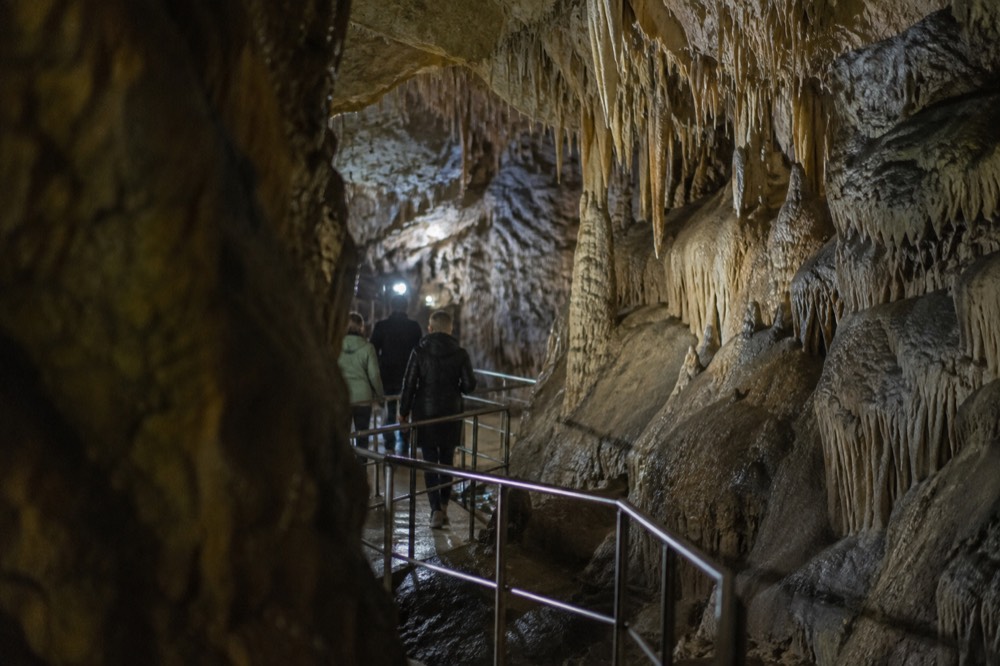
The cave itself deserves its reputation. The visitor route covers 3.7 km, partly on foot and partly on the cave train, and the whole tour runs about an hour and a half. The 10 C interior temperature is the detail people forget: it is the same in January and July, which makes Postojna the reliable answer on a wet day or a heatwave, and it also means shorts are a mistake. Predjama Castle, the cliff-face castle a short drive from the cave entrance, costs 24.00 EUR for an adult and is open year round, so a combined day can take in mine, cave and castle in one sweep.
If you would rather not drive, the bookable option covers all of it. The Cave and Castle day trip runs six hours from Ljubljana, is rated 4.8 across 2802 reviews and starts from $132, with entry tickets and transport in the package. It does not stop in Idrija, but it removes every logistical decision from the karst half of the day, which is a fair trade for many travellers. Check availability
For a fuller treatment of the underground options, read our guides to Postojna Cave and Predjama Castle, and the comparison of Škocjan Caves, the wilder UNESCO-listed alternative whose tours run 2h30 to 3 hours with roughly 400 stairs. Škocjan is a walk where Postojna is a train ride, and that distinction decides the day for most people.
If your appetite runs to the coast as well as the caves, the UNESCO Škocjan Caves and Piran day trip pairs the karst with the Adriatic in nine and a half hours, rated 4.7 from 382 reviews and from $126. It is a long day, but it is the single tour that comes closest to the full western-Slovenia loop an Idrija car day would otherwise give you.
When Is the Best Time of Year for an Idrija Day Trip?
Late spring through early autumn is the best window, roughly May to September, when the valley is green, the walking is comfortable and the long evenings let you linger. Winter trips work too, because the mine and museum are indoor attractions, but the days are short and the light is flat. The one thing to plan around is that September and October, the shoulder season most people assume is dry, are actually Ljubljana's joint wettest and foggiest months.
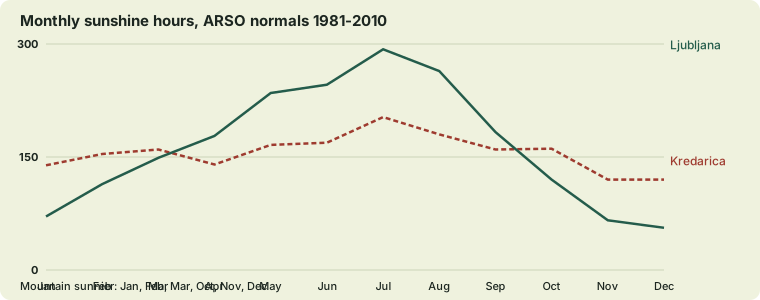
That last point is the one the guidebooks get wrong, and it is worth understanding before you set a date. Ljubljana sits in a basin, and in the colder half of the year cold air is trapped under warmer air above it, so the city fogs in while the hills a few hundred metres up sit in sunshine. ARSO's climate normals record 56 hours of sunshine in the whole of December in the city, against 120 hours at Kredarica at 2514 m on Triglav over the same month. The city wins April to September and loses October to March: the lines cross.
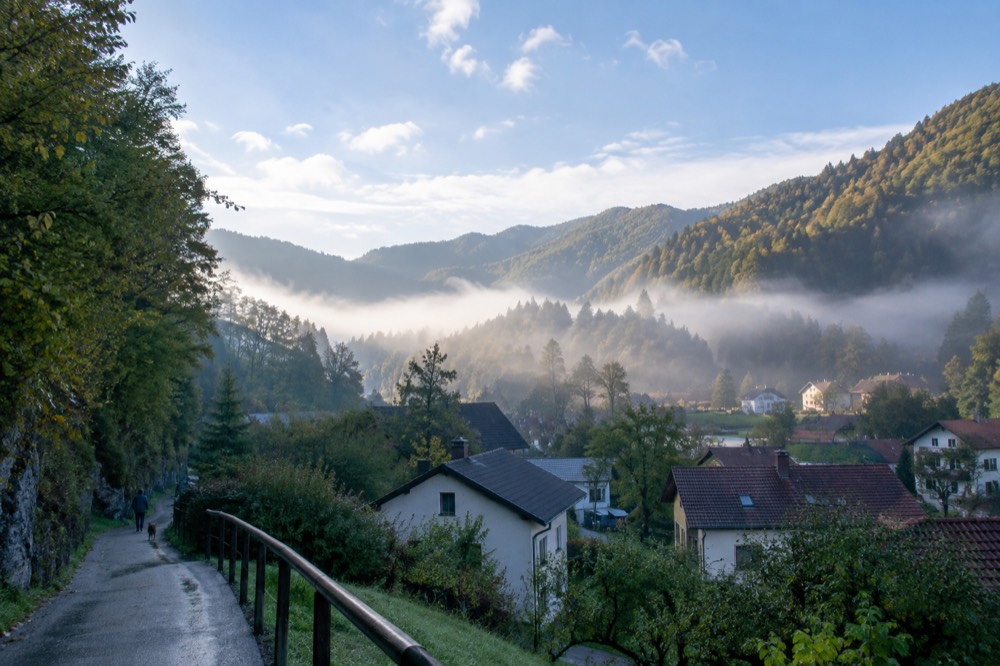
Idrija, being a valley town in the same hill system, inherits a version of the same pattern. The practical advice it produces is counterintuitive: on a grey, foggy morning in the capital, the day trip is still worth it, because you may drive up out of the murk into sun within a few hundred metres of elevation, and the best time to visit Ljubljana question has a different answer than most visitors expect. Our fuller treatment of Ljubljana in winter covers the inversion in detail.
The season-by-season picture, from ARSO's published normals:
| Season | Conditions | Verdict for Idrija |
|---|---|---|
| May-Jun | 235-246 sunshine hours a month in the city | Best window: green, long evenings |
| Jul-Aug | Warmest months, 21.3 and 20.6 C means | Excellent, but caves are the heatwave escape |
| Sep-Oct | 147 mm rain each, 12.4 fog days each | Fine, but pack for the wet shoulder |
| Nov-Feb | 56-71 sunshine hours a month in the city | Indoor sights carry the day; go up for sun |
For the cave half of a combined day, season matters less than you think. Postojna holds a steady 10 C and runs every day of the year, and Škocjan holds about 12 C, so the underground half of your itinerary is weather-proof in any month. What the seasons actually decide is the above-ground half: the Idrijca gorge walk, the Vintgar Gorge season, which runs April to October with an exact closing date that depends on conditions, and whether you will be eating your žlikrofi on a terrace or beside a stove.
What Does an Idrija Day Trip Cost?
A self-drive day is cheap once you are on the road, because Idrija's attractions are modestly priced and the town itself costs nothing to wander. The expensive half, if you add it, is the karst: Postojna Cave at 34.90 EUR and Predjama Castle at 24.00 EUR per adult, which is why many travellers hand the whole karst leg to a guided tour from $132 with tickets included. Build the budget from the pieces you actually want rather than buying everything.
The honest cost table, using only figures that can be verified:
| Item | Figure | Notes |
|---|---|---|
| Idrija mine heritage site | Confirm on site | Hours and admission vary by season |
| Idrija town museum, Gewerkenegg | Confirm on site | Combined tickets sometimes available |
| Postojna Cave, adult | 34.90 EUR | Child 6-15: 20.70 EUR; under 6s: 1.00 EUR |
| Predjama Castle, adult | 24.00 EUR | Open year round |
| Škocjan Caves, adult | 16.00-24.00 EUR by season | 12 C inside; 2h30 to 3h tours |
| Guided cave-and-castle day trip | from $132 | Six hours, tickets and transport included |
| Lunch, žlikrofi in Idrija | modest, tavern prices | The town's signature dish |
Two warnings on figures you will see elsewhere. There is no reliably published combined Postojna plus Predjama ticket price: two different figures circulate, and one of them is simply the sum of the two separate tickets, so treat any "combo price" you find with suspicion and check the operator's own ticket page. And there is no verified published fare for the Ljubljana to Bled coach or train, despite confident numbers all over the internet; the same caution applies to any Idrija bus fare you see quoted on a third-party site.
The guided-tour arithmetic deserves a sentence of its own. The cave-and-castle trip from $132 looks dear next to two cave tickets, but it includes transport from Ljubljana, the entry tickets and the driving, and it is rated 4.8 from 2802 reviews, which is a large sample of people who thought it worth the money. Against the cost of a [hire car](https://discovercars.tpk.ro/laYIo9hK) for the day plus fuel plus tickets, the gap narrows to a judgement call about flexibility. If you want to stop in Idrija itself, the car wins, because no standard group tour does.
What Else Can You Pair with Idrija?
The natural pairings are the karst sights to the south, Postojna, Predjama and Škocjan, and the alpine roads to the north-west towards the Soča valley. Idrija sits between the two worlds, which is exactly why it rewards a little planning: a car day can chain Idrija with one or the other comfortably, but not both. Choose caves or mountains, and give the day to that choice.
The northern route is the more spectacular. From Idrija the road climbs towards the high country of the Julian Alps, and the Soča valley and the Vršič Pass beyond it are among the most dramatic driving in Slovenia. The ten-hour guided Soča Valley and Kranjska Gora tour, rated 4.9 from 183 reviews and from $134.78, covers that world for travellers without a car, though it routes from Ljubljana rather than through Idrija. If your heart is in the mountains, our day trips from Ljubljana guide ranks the options.
The southern route is the more family-proof. Caves hold the same temperature year round, so a Postojna or Škocjan afternoon never gets rained off, and Predjama Castle is a cliff-face fortress that children tend to remember. The Škocjan Caves half-day trip runs four and a half hours from the capital, rated 4.8 from 48 reviews and from $110, for visitors who want the wilder cave without a full-day commitment.
And if the day trip is really a prelude to a longer stay, the pairing question becomes a base-camp question. Our comparison of Ljubljana or Bled and the guide to where to stay in Ljubljana cover the two most common answers, and both work for an Idrija outing: the capital for the karst side, Bled for the alpine side.
Back in the capital, if your Idrija day leaves you with an evening to fill, the guided walk with funicular ride to Ljubljana Castle is a two-hour Old Town walk rated 4.6 from 650 reviews, from $24, and it ends with the funicular up to the castle. The castle grounds are free to enter, and the funicular and tower are the parts that are not, which is the distinction that saves confusion at the gate.
Common Questions About an Idrija Day Trip from Ljubljana
How do you get from Ljubljana to Idrija?
By car on the motorway west, by regional bus, or as part of a privately arranged tour loop. There is no rail line to Idrija. The drive is straightforward and the final stretch along the Idrijca is the scenic part; bus timetables thin out at weekends, so confirm departures with the operator before you commit.
What is Idrija famous for?
Mercury and lace. Its mine was one of the world's largest mercury producers for roughly five centuries and the mining heritage is UNESCO-listed jointly with Almadén in Spain. Bobbin lace-making, begun as a cottage industry for miners' families, is still taught and celebrated, and the town also gave Slovenia žlikrofi, its protected hand-pinched dumplings.
Can you combine Idrija with Postojna Cave in one day?
Yes, by car, and it is the pairing most visitors should build. Idrija in the morning and Postojna in the afternoon works comfortably. Postojna tours run every day of the year, the adult ticket is 34.90 EUR, and the cave holds a steady 10 C, so bring a layer even in summer.
Is Idrija worth visiting if you have already seen Bled and Postojna?
Yes, precisely because it is not Bled or Postojna. Idrija is a quiet heritage town with a mine, a castle museum, a lace tradition and a river gorge, and it sees a fraction of the crowds. It suits a second or third trip to Slovenia better than a first, when the headline sights still beckon.
When is the best time of year to visit Idrija?
May to September, for green valleys, comfortable walking and long evenings. Winter visits work because the mine and museum are indoors, but days are short. Be aware that September and October are Ljubljana's joint wettest months at 147 mm each and among its foggiest, so the shoulder season is not the dry window people assume.
What should you eat in Idrija?
Žlikrofi, the town's protected hand-pinched potato dumplings, served classically with a meat sauce or dressed with butter and breadcrumbs. They appear on nearly every menu in town, and the traditional taverns around the centre are the places to try them.