Ljubljana Events Calendar Month by Month: What Actually Happens Each Month
Ljubljana's event year is shaped less by a festival calendar than by the city's own rhythm: a pedestrianised centre that fills on warm evenings, a riverside market that runs on Fridays, museums that open free on the first Sunday of each month, and a basin climate that quietly decides which months feel alive.
Short answer
Ljubljana's fixed event anchors are Open Kitchen on Fridays from roughly March to November, free first-Sunday admission at the national museums, and the Christmas season in December. The city averages 37 clear days a year, so the real planning question is weather: April to September delivers the sunshine, while September and October tie with December as the foggiest months.
Ljubljana does not have one blockbuster festival month the way some capitals do. Its event year is built from smaller, repeated rhythms: a food market that takes over Pogačarjev trg every Friday of the warm season, national museums that drop their admission on the first Sunday of every month, a pedestrianised centre that becomes the venue itself whenever the weather holds. Plan around those rhythms and the weather that drives them, and almost any month works.
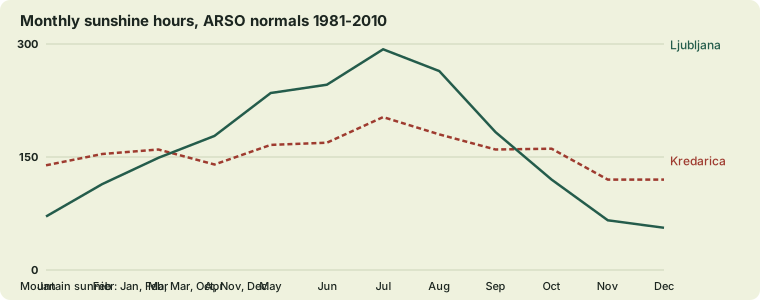
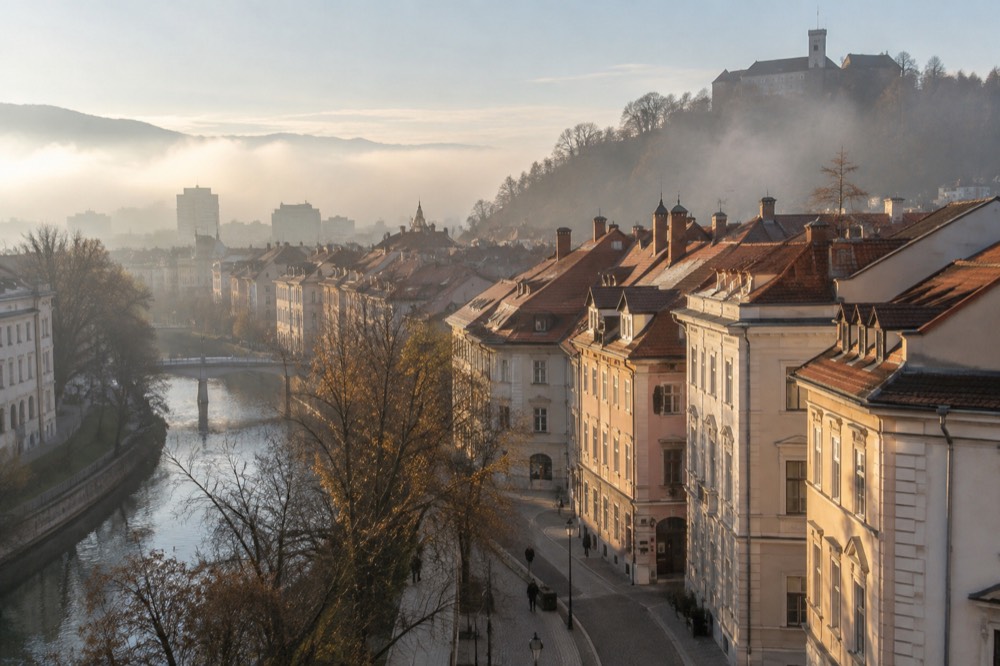
The weather part matters more here than in most cities, and the numbers explain why. Ljubljana averages just 37 clear days a year against 130 overcast days, according to ARSO's 1981-2010 climate normals. The city sits on the floor of a basin at 299 metres, and in the colder half of the year cold air is trapped under warmer air above, so the city fogs in while the hills a few hundred metres up sit in sunshine. December delivers 56 hours of sunshine in the entire month, under two hours a day, while Kredarica up on Triglav at 2514 metres gets 120 hours over the same December. This guide walks the year month by month, pairing what is actually happening in the city with the conditions you will find it in.
What Events Run in Ljubljana in January and February?
January and February are the quietest event months in Ljubljana, with the year's thinnest daylight and the foggiest mornings of winter, but the city's indoor life runs at full strength and the first Sunday of each month still opens the national museums free of charge. The Christmas season winds down in the first days of January, and the city settles into its most local pace. Visitor numbers drop, hotel demand eases, and the museums, galleries and restaurants carry on. It is the month for the National Gallery, the City Museum and long lunches rather than open-air spectacle.
The practical case for these two months is indoor depth. The National Gallery is open Tuesday to Sunday and stays open to 20:00 on Thursdays; the Slovenian Ethnographic Museum does the same. Almost every major museum closes on Monday, so build the week around Tuesday onward. Ljubljana Castle is open 365 days a year, with the attractions running 09:00-18:00 in this season, and it opens late, from 10:00, on 1 January after closing early at 17:00 on 31 December.
Weather sets the tone. January averages 71 hours of sunshine and February 114, still the two dullest months after December, and mean daily maxima sit at 3.4 and 6.4 degrees Celsius. Snow is a real presence rather than a rarity: the city averages 15 days with snow cover at 07:00 in January and 14 in February. The basin inversion means that when the city is grey, the hills above it are often in sun, which makes this the season to ride the funicular up to the castle or take a day trip upward. The Ljubljana in winter guide covers the cold-season strategy in detail.
| Month | Sunshine hours | Mean daily max | Snow-cover days at 07:00 | Clear days |
|---|---|---|---|---|
| January | 71 | 3.4 C | 15 | 2 |
| February | 114 | 6.4 C | 14 | 4 |
What Happens in Ljubljana in March and April?
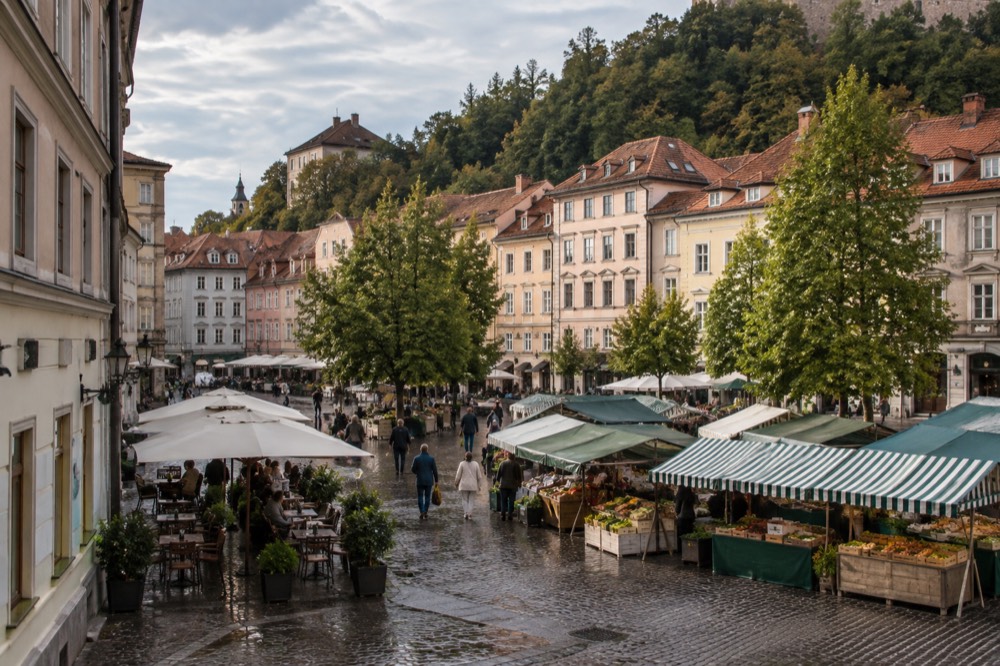
March brings the first warm-terrace weekends and the start of the Open Kitchen food market on Fridays, while April is the month the event year properly opens: 178 hours of sunshine, the outdoor café season starting, and the first genuinely reliable evenings outside. Open Kitchen, Odprta Kuhna, runs on Pogačarjev trg roughly March to November, from 10:00 to 21:00 and later on warm days. The official wording is that it happens "every sunny Friday", and that is literal: the market is cancelled in bad weather, so a grey Friday in March can mean an empty square. Check the forecast before you build a day around it.
The Central Market next door on Vodnikov and Pogačarjev trg runs year round, roughly 06:00-18:00 Monday to Saturday in summer hours, with the covered halls open Monday to Friday 07:00-16:00 and Saturday 07:00-14:00. April adds limited Sunday and holiday opening. The market and the Friday food event together make the riverside strip between the Triple Bridge and the Dragon Bridge the busiest open-air space in the city, and the Central Market guide maps the stalls and hours.
Easter falls in March or April, and with it the first domestic crowd surge of the year. Otherwise these months belong to the city itself: the Tivoli Park chestnut avenues leafing out, the Ljubljanica boat season starting to build, and the first stand-up paddle evenings on the river. Daylight stretches fast, from under two hours of daily sun in December to nearly six a day by April.
What Is on in Ljubljana in May and June?
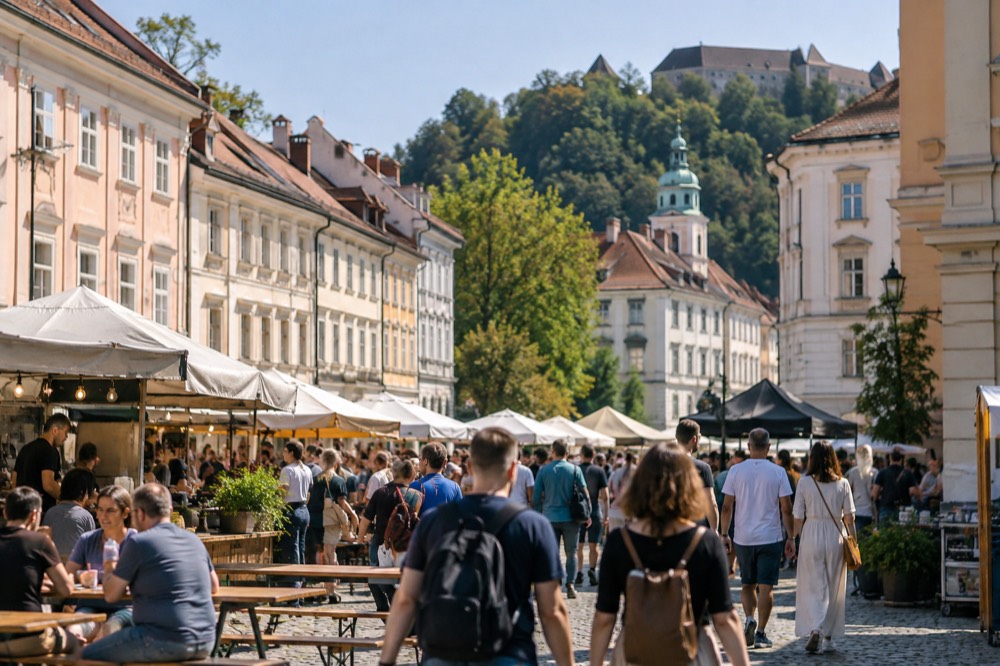
May and June are the first genuinely event-full months: Open Kitchen runs every sunny Friday, the riverside terraces and boat cruises hit full season, and the funicular and castle attractions extend their hours to 09:00-22:00 and 09:00-20:00 respectively from May through September. This is when the pedestrianised centre earns its keep. With roughly 235 hours of sunshine in May and 246 in June, and mean daily maxima of 21.4 and 24.6 degrees Celsius, the squares stay populated well past sunset.
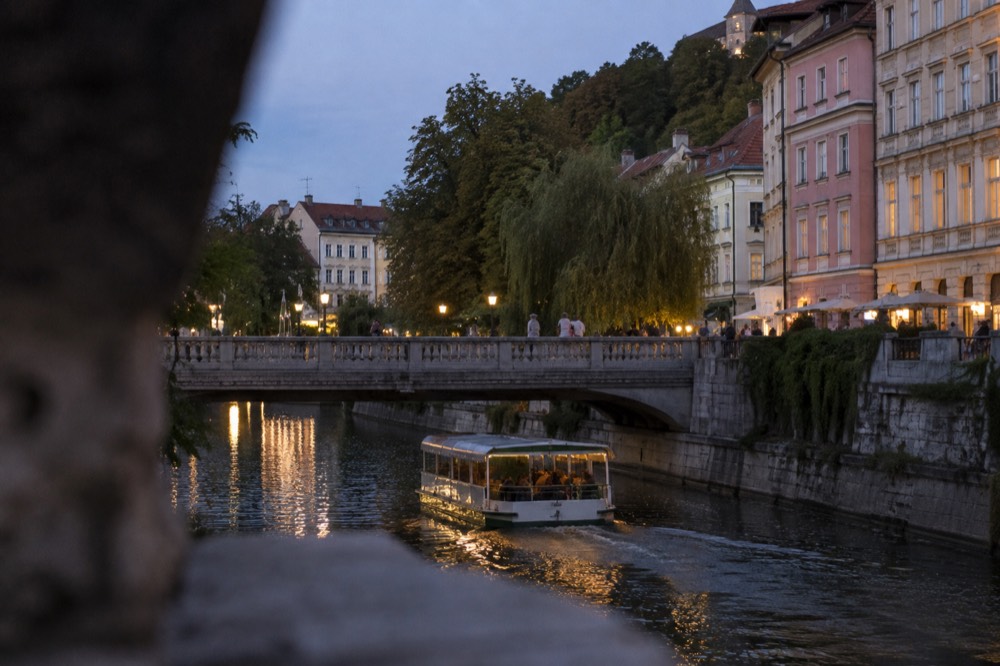
The river becomes the venue. Barka Ljubljanica runs 50-minute cruises from the Breg 1 pier hourly from 11:00, with the last departure around 19:00, from May to September. The [Ljubljanica river cruise guide](/attractions/ljubljanica-river-cruise/) compares the operators and departure points. On the food side, the Slovenian Cuisine Walking Tour with Tastings runs four hours through the city's eating traditions, and the wine tasting experience pairs a silent electric boat ride on the Ljubljanica with local wines and appetizers.
June is also the month the mountain day trips open properly. The Vintgar Gorge season opens in April, but by June the full summer hours of 08:00-17:00 apply, and the Triglav National Park routes are clear of snow. A word of caution on the calendar: June averages 144 mm of rain, more than July's 115 mm, and it was the wettest month of the year in the older 1971-2000 normals. The thunderstorms are short and violent rather than all-day, but they will cancel a Friday food market.
| Month | Sunshine hours | Mean daily max | Rainfall | Open Kitchen |
|---|---|---|---|---|
| May | 235 | 21.4 C | 109 mm | Fridays |
| June | 246 | 24.6 C | 144 mm | Fridays |
What Should You Expect from Ljubljana in July and August?
July and August are Ljubljana's peak visitor months, with the year's best weather, 293 and 264 sunshine hours respectively, every open-air event at full throttle, and the biggest crowds on the riverside and at the castle. The mean daily maximum reaches 27.3 degrees Celsius in July, and the record high is 37.3 degrees, set in August. On those days the city's own advice writes itself: the Ljubljanica banks, Tivoli Park's shade and the evening hours carry the day, and the caves become the heatwave answer, because Postojna holds about 10 degrees Celsius year round regardless of what is happening above ground. The free walking tours and river cruises all run at maximum frequency, and the squares stay busy until well past midnight.
The free walking tour calendar also peaks here. GuruWalk's Ljubljana Unveiled, a tips-based two-hour walk from Roman roots to the Dragon Bridge, runs most frequently in these months, as does the night walk that explores the corners daytime tours skip. The free walking tour guide explains how the pay-what-you-think model works. The pub crawl, a five-hour guided bar-hop, is very much a summer-season product too.
August carries one planning wrinkle that domestic visitors know well: it is a peak holiday month, and the coast and Bled absorb a large share of the traffic. Ljubljana itself thins slightly in the last week of August as families return home, which makes late August one of the better-value windows of summer. Rainfall rises to 137 mm in August, but it falls in short storms, and the city averages 6 clear days in the month, the year's best alongside July's 5.
Why Are September and October the Months Visitors Misjudge Most?
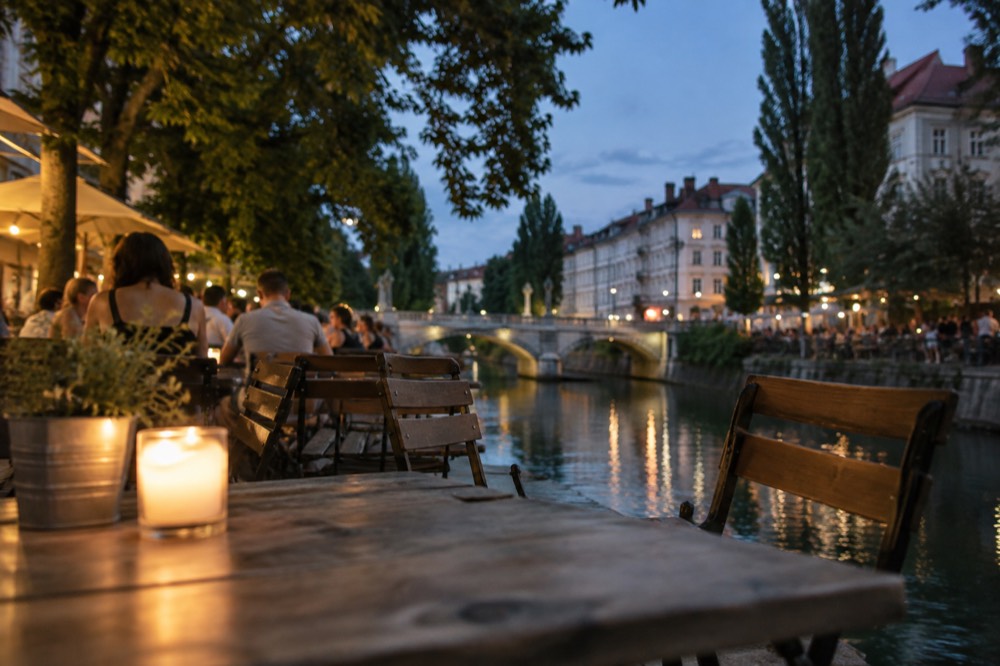
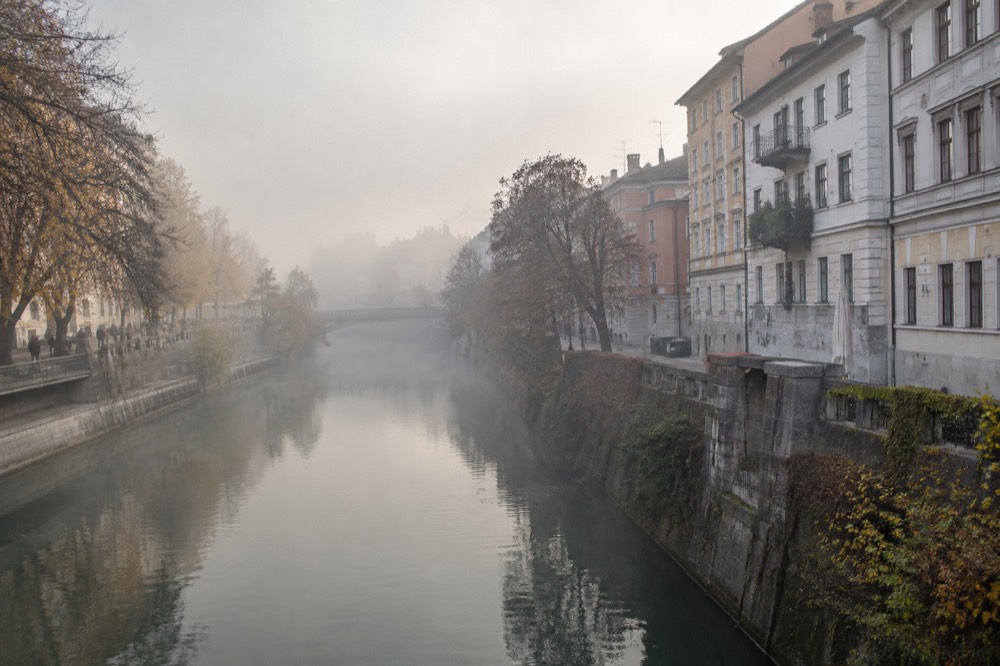
September and October are joint wettest months of the year in Ljubljana at 147 mm each, and they tie with December as the foggiest at 12.4 fog days each, yet they are also the months with the warmest water, the thinnest crowds and the most atmospheric mornings, which is why the local verdict on autumn differs so sharply from the guidebook one. The fog series comes from ARSO's 1971-2000 normals, the only period for which fog is published, and it shows September's 07:00 relative humidity at 94 percent, the most humid morning of the year. Most visitors arrive expecting a dry golden shoulder season and find river mist instead.
That is not a reason to avoid the months; it is a reason to plan around the mornings. The fog sits in the basin, and by late morning it usually lifts. Open Kitchen still runs on Fridays through September, with the season ending around November, and the museum calendar is at full strength. The first-Sunday free admission at the national institutions is at its most useful now, because September and October average just 2 and 1 clear days respectively, and an overcast Sunday is a museum Sunday. Everything else covered here is indexed on Ljubljana Travel Guide.
The basin inversion is the autumn wildcard. On a foggy October morning the temperature at Katarina nad Ljubljano, at 660 metres, can exceed the temperature in the city at 299 metres, because the cold air is trapped at the bottom. The practical translation: when Ljubljana is grey, Šmarna Gora, the castle hill and the Bled day trips are frequently in sunshine. The best time to visit Ljubljana guide runs the full twelve-month comparison.
| Month | Rainfall | Fog days | Clear days | Open Kitchen |
|---|---|---|---|---|
| September | 147 mm | 12.4 | 2 | Fridays |
| October | 147 mm | 12.4 | 1 | Fridays |
What Is on in Ljubljana in November?
November is the quietest event month of the autumn, with the year's fewest clear days at one, Open Kitchen reaching the end of its season, and the city pivoting hard toward indoor life: museums, galleries, the cooking class calendar and the first Christmas build-up at the end of the month. The 1981-2010 normals give November 66 hours of sunshine, a single clear day, 129 mm of rain and 17 overcast days, the second-greyest month after December's 19. The covered market halls keep their Monday-to-Friday 07:00-16:00 rhythm, and the outdoor stalls shorten to winter hours around 06:00-16:00.
The indoor programme is the point of the month. The Museum of Illusions is open daily 09:00-21:00, the most evening-friendly museum in the city. The Plečnik House runs guided tours on the hour, Tuesday to Sunday, and the Plečnik guide explains why the architect's own home is the best single introduction to the city's look. The štrukelj cooking class, three hours of hands-on pastry work, moves indoors in every sense and makes a strong November afternoon.
The last week of November is when the Christmas frame goes up. The lights and stalls that define December in the old town are assembled through late November, and the Ljubljana Christmas market guide covers what to expect once they open. If you want the city at its most local, with the museums to yourself and the restaurants unthronged, November delivers that more reliably than any other month.
What Makes December in Ljubljana Special?
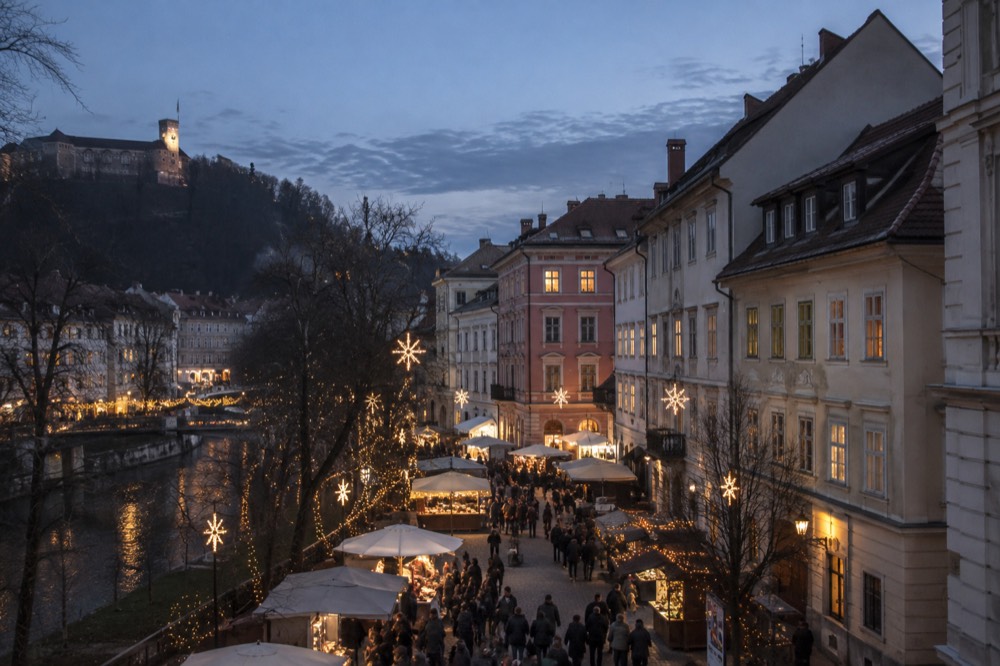
December is Ljubljana's single biggest event month, when the Christmas markets fill the old town and the evenings carry the city, and it is also the darkest month in the calendar, with 56 hours of sunshine across the whole month, 2 clear days and 12.6 fog days, so the events are built almost entirely around lights, food and indoor warmth. The contrast is the story. The basin inversion caps the city in grey for much of the month while the hills above sit in sun, and the city responds by lighting itself: the riverside, the squares and the castle walls become the event.
The castle adjusts its hours for the season, with attractions running 09:00-18:00 and the funicular 09:00-19:00, closing early at 17:00 on 31 December and opening late at 10:00 on 1 January. The castle funicular guide has the full price list, including the 19.00 EUR adult ticket that combines the funicular with the tower and exhibitions. The New Year period is the one stretch when the pedestrian centre is genuinely packed in the evening, and the Ljubljana in December guide covers the season in depth.
Two December facts are worth carrying into any plan. First, the fog: at 12.6 fog days it is the annual peak, and the morning after any overnight clear sky is likely to start white. Second, the cold is real but moderate, with a mean daily maximum of 3.8 degrees Celsius and a record low of -20.3 degrees for January. Pack for standing around outdoors in the evening, because that is what December in Ljubljana is for.
| December figure | Value |
|---|---|
| Sunshine hours | 56 |
| Clear days | 2 |
| Fog days | 12.6 |
| Mean daily maximum | 3.8 C |
| Castle attractions hours | 09:00-18:00 |
| Funicular hours | 09:00-19:00 |
Which Monthly Rhythms Run All Year in Ljubljana?
Three fixed rhythms run through every month of the Ljubljana year: free admission at the national museums on the first Sunday of each month, the Central Market's standing schedule on Vodnikov and Pogačarjev trg, and the pedestrianised centre itself, roughly 20 hectares closed to general traffic, which turns any warm evening into an event without a calendar entry. The first-Sunday rule is confirmed on the National Museum of Slovenia, National Gallery, MSUM and Slovenian Ethnographic Museum sites in their own words, and it is the single best free thing the city does. Pair it with the free things to do in Ljubljana guide for a full free-day plan.
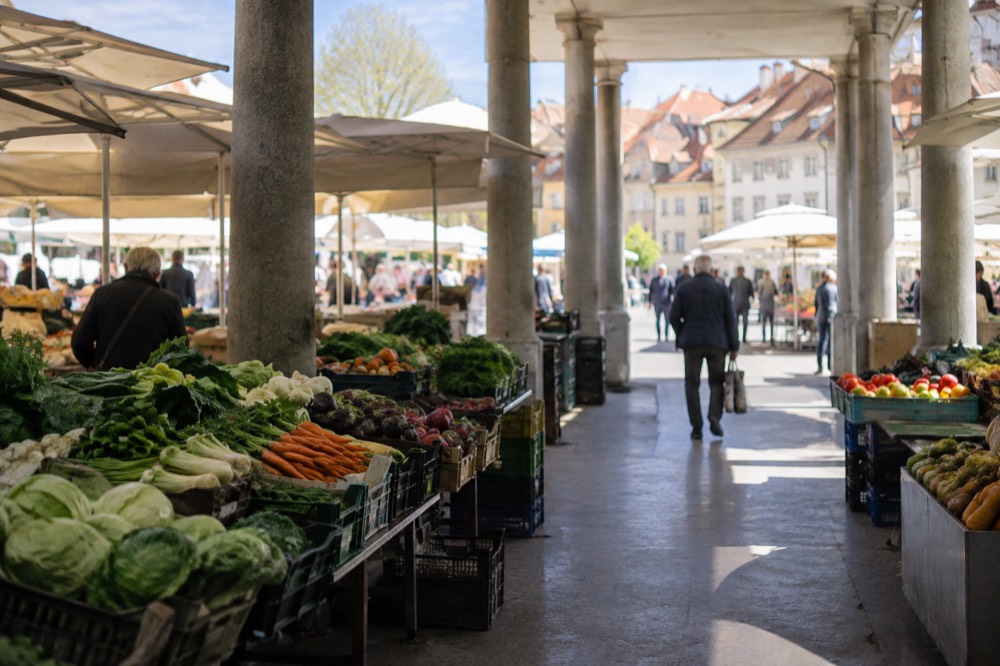
The market rhythm is second. The outdoor stalls run roughly 06:00-18:00 Monday to Saturday in summer and 06:00-16:00 in winter, with limited Sunday and holiday opening April to November, and the covered halls run Monday to Friday 07:00-16:00, Saturday 07:00-14:00. The Ljubljana markets guide covers the stallholders. The third rhythm is the one visitors notice first: the car-free centre, progressively expanded since 2007, means the default experience of Ljubljana is walking, and any evening above about 20 degrees fills the squares on its own.
How Do You Plan an Event Trip Around Ljubljana's Weather?
Plan Ljubljana event trips around the sunshine curve rather than the festival curve: April to September delivers between 178 and 293 sunshine hours a month, while October to March never exceeds 161, and the crossover is sharp enough that the same city feels like two different destinations either side of it. The ARSO 1981-2010 normals put the annual total at 1974 hours, but the distribution is extreme: July's 293 hours against December's 56. The city's own events calendar bends around this, with everything open-air compressed into roughly April to November and everything lit, indoor or festive compressed into December.
The planning method is simple. For open-air months, book the flexible things, walks and boats, for the afternoons and keep mornings loose, because even summer storms are short. For the grey months, invert it: museums and caves for the day, lit squares and restaurants for the evening. And whenever the city is fogged in, remember the inversion: the hills above are often in sun, which is why a castle morning or a Bled day trip rescues more grey Ljubljana days than any indoor programme. The official tourist board's Open Kitchen page carries the current Friday schedule, and ARSO's published normals are the source behind every figure in this guide.
One last scheduling fact that no event calendar will tell you: Ljubljana is a two-night city. SURS counted 1,392,728 arrivals and 2,844,129 overnight stays in the municipality in 2025, an average of about 2.04 nights per visit. Most visitors compress their event time into a weekend, so Friday to Sunday is when the squares are busiest and Monday is when the museums close. A Tuesday-to-Friday visit gets you the same city with roughly half the company.
Common Questions About Ljubljana Events Month by Month
What events run in Ljubljana in January and February?
The quietest event months of the year. The national museums open free on the first Sunday of each month, Ljubljana Castle runs its full programme 09:00-18:00, and the indoor calendar, galleries, cooking classes and long lunches, carries the season. Expect 71 sunshine hours in January and snow cover on about 15 days.
What happens in Ljubljana in March and April?
Open Kitchen, the Friday food market on Pogačarjev trg, starts its roughly March-to-November season, running 10:00-21:00 on sunny Fridays and cancelled in bad weather. April brings 178 sunshine hours and the outdoor café season begins.
Why are September and October the months visitors misjudge most?
They are the joint wettest months at 147 mm each and tie with December for fog at 12.4 fog days each, per ARSO's 1971-2000 fog series. Visitors expect a dry golden shoulder and find river mist instead, though mornings usually clear and the hills above the basin are often sunny.
What makes December in Ljubljana special?
It is the biggest event month: the Christmas markets fill the old town and the lit squares carry the evenings. It is also the darkest month, with 56 sunshine hours and 2 clear days, so the season is built around lights, food and indoor warmth.
Which monthly rhythms run all year in Ljubljana?
Free first-Sunday admission at the national museums, the Central Market's standing schedule on Vodnikov and Pogačarjev trg, and the roughly 20-hectare pedestrianised centre, which turns any warm evening into an event without a calendar entry.
How do you plan an event trip around Ljubljana's weather?
Follow the sunshine curve: April to September delivers 178 to 293 sunshine hours a month, October to March never exceeds 161. Book open-air activities for the afternoons in summer, museums and caves for grey days, and remember the basin inversion means the hills are often sunny when the city is fogged in.